Auszeichnung
künstlerischer Projekträume
und -initiativen

Institut für Alles Mögliche

2012
Schererstraße
11
Berlin
13347

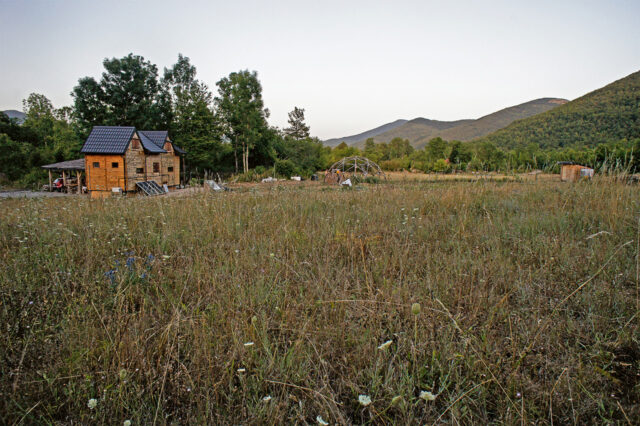
Kruno Jošt, Reservat Kroatien (Lovinac, HR), Foto: Institut für Alles Mögliche

Klubräume (Norwich, UK), Foto: Institut für Alles Mögliche
In the early years, we were not thinking so much about accessibility to our exhibitions and events in a physical sense of venues without elevators or events without translation, but also in a digital sense. For many years, our online magazine hadn’t been accessible for screen-readers for people with poor vision or the blind, or keyboard navigation for people with mobility issues, for example. Getting there was a journey, and I think we would now start from a more accessible place. I would want local politicians to make their funding applications more accessible, not only in terms of able-ism, but also in terms of all forms of discrimination, e.g. proof of citizenship, applications having to be written in German. I wish that they would give a universal basic income to everyone (not just citizens), open their borders, and make healthcare free, free for everyone.The pandemic gave us a pause and became a forced hiatus. For us, it didn’t make sense to organize events or to move into the digital space during the last year. A willingness to think outside the box, to implement short-term funding, and to listen to the needs of the community. Not everyone requires long term investments; others would like to apply for EUR 500 to develop a project for next month. These quick, low-cost funding opportunities are not clearly available yet. When implementing initiatives, first think about the places and the people you are trying to serve. Requiring project spaces to have a program mapped out six months in advance, or ask for only German-language applications is not responding to the community.Durch die vermehrten Fördermöglichkeiten kann ich als Projektraumbetreiberin weiterhin komplett unabhängig von einer Marktorientierung agieren. Diese Entwicklung ist sehr positiv. Denn gerade in der Randlage Marzahn-Hellersdorf kann es keine marktorientierten Überlegungen für die Ausrichtung eines Programms geben. Es gibt kein tou­ri­s­tisches Publikum. Das Publikum generiert sich aus den Menschen vor Ort. Für Marzahn-Hellersdorf bedeutet dies, dass sich die Menschen oft in prekären finanziellen Situationen befinden, eine marktorientierte Ausrichtung passt nicht in diesen Kontext. Die Themen Stadtmitte − Peripherie, öffentlicher Raum und/oder Rechtspopulismus können nicht marktorientiert verhandelt werden.