Auszeichnung
künstlerischer Projekträume
und -initiativen
Auszeichnung
künstlerischer Projekträume
und -initiativen
Archiv
:
2023
,
2022
,
2021
,
2020
,
2019
,
2018
,
2017
,
2016
,
2015
,
2014
,
2013
,
2012
Events
Archiv
Information
Stipendien 2021
Stipendien 2022
Statements
Rückblick
Kontakt
Impressum
2016
,
ZWITSCHERMASCHINE/ Kulturpark 3000 e. V.
2016
,
2013
Potsdamer Straße
161
Berlin
10783
zwitschermaschine-berlin.de
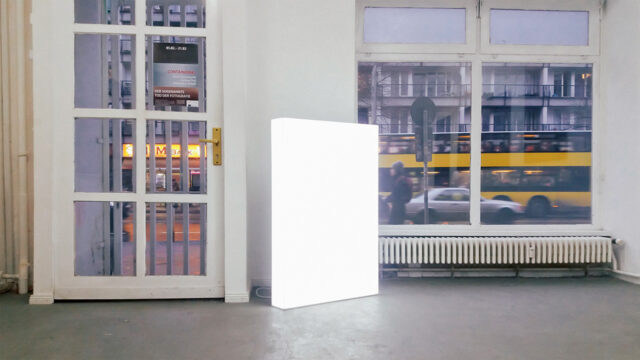
Justyna Dryl,
Light Container,
2016, Foto: Karol Komorowski
Every hour one puts into the project will be missed in your own practice. Project spaces are significant to counter the institutions and their market-oriented curated productions. They still have the capacity to foster artistic practices and communities, but also to be resistant to general tendencies and trends. Perhaps project spaces are now what once were the underground and the avant-garde.
… But definitely key words such as “project space”, “artist-run”, “grassroots”, “laboratory”, etc. are still good key words (to be constantly re-discussed) that underline the spirit and intention of such open experiments that somehow can only function as open experiments! A free interactive and inclusive format to create, express, and exchange interdisciplinary ideas with spontaneous, playful, DIY approaches; having access to and exchanging various physical spaces to manifest all facets of what independent cultural production can unfold – also in the sense of creating social awareness and responsibility due to the fact that every single participant, no matter the “role” or “title” is deeply aware & involved in the process of making things happen, sharing responsibilities and profits (if there are any 🙂 … Investors and businesses assumed the form of faceless international partnerships with enormous capital and devouring public resources deciding on the future of all citizens, delivering less and less social protection and consideration for cultural and social diversity.
Art should first and foremost raise questions that are important for present and future societies. In the last decade, art has moved closer to science, technology, and society. It has become less commercialized and more diverse. We would like art to become not only illustrative and speculative, but also functional, embedding even more science and technologies within itself. This would encourage the audience to be even closer to art, perhaps more critical, diverse, tolerant, and creative.