Auszeichnung
künstlerischer Projekträume
und -initiativen

The Institute for Endotic Research

2015
Donaustraße
84
Berlin
12043

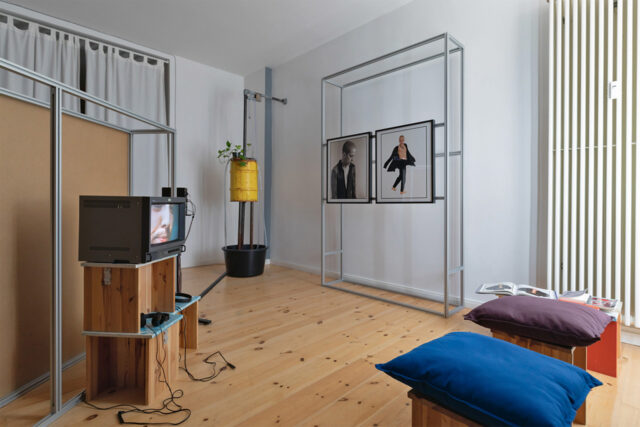
Pol Merchan, Pirate Boys, featuring Del LaGrace Volcano, 2021, Ana Alenso, green and yellow, boom and bust, 2018, Foto: Benjamin Busch
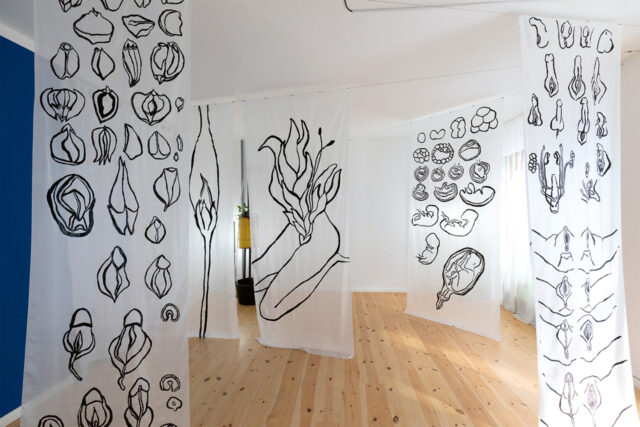
Sofia Lomba, Bondage Bodies, 2021, Serie Maintenance! Domestics as Institutional Becomings, Foto: Benjamin Busch

Answering this question seems to be the most difficult and an endless process for me because I have to ruminate on the past decade or so in which I have gone through Berlin as a female artist, a Korean artist, the founder and chief of an Asian contemporary art platform, and a mother. Since the very beginning, I have been interested in seeking a kind of universal identity, spanning the various backgrounds of ­Berlin-based contemporary artists in order to examine the question of identity as it is often perceived from the outside: according to gender, nationality, and cultural milieu. So I have created a space where the dichotomous logics about those issues could be discussed, proceeding with many projects. Above all, I had dreamt of creating a self-supporting space, based on an independent profit model. Recognizing limitations in workforce, culture, and the market of the art scene, however, I have experienced some moments of great suffering. But what has ­enabled me to endure those moments of suffering was not money but people, so that I would answer sincerely that a project space no longer means a physical space for me. It is a non-physical space, comprising people like artists, users and agents, or sometimes a network.Die Coronapandemie hat uns merkwürdigerweise eher resilienter und produktiver gemacht − und darin bestärkt, immer wieder hinaus in den Stadtraum zu gehen, um zu versuchen, Einfluss zu nehmen.Es gibt keinen Prototypen, von dem aus verbindliche Aussagen gemacht werden können. Das zeigen auch immer ­wieder die Selbstverständnisdebatten. Die Projekträume haben sich mit der Stadt und ihrer Gentrifizierung geändert, aber ebenso mit dem Kunstsystem und der Kunst bzw. der künstlerischen ­Praxis in der Stadt. Die Szene ist konstant im Fluss. Manche Projekträume haben sich institutionalisiert, andere lehnen das kontinuierlich ab und befinden sich eher außerhalb des Radars. Ich sehe darin eine Stärke und würde nicht von einem „idealen Projektraum zur jeweiligen Zeit“ sprechen. So unterschiedlich die Räume physisch sind, so unterschiedlich ist teilweise die Art, wie sie gemacht werden, und an wen sie sich wenden.