Auszeichnung
künstlerischer Projekträume
und -initiativen

LA PLAQUE TOURNANTE

2013–2018 (pausiert)
Initiative

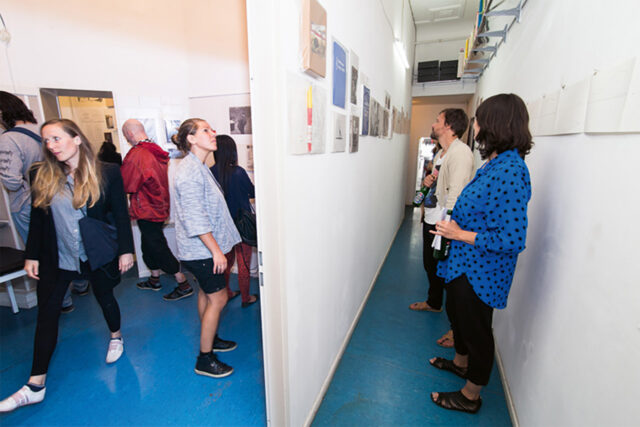
Ausstellungsansicht, 2014, Foto: Frederic Acquaviva
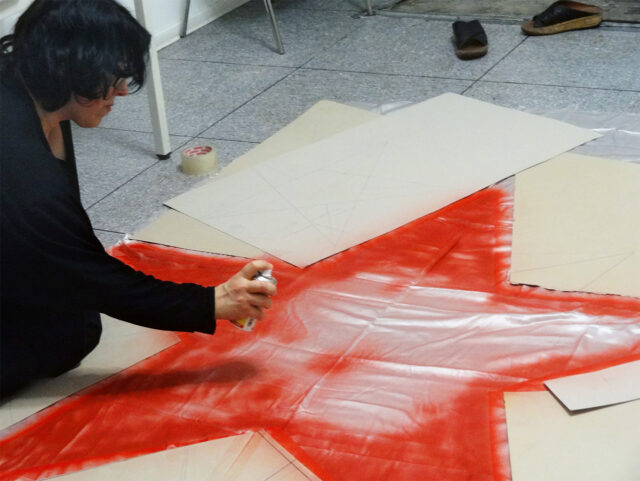
Making the adverts for Die Stimme Partie, 2016, Foto: Frederic Acquaviva

For many decades Berlin has developed a lively, diverse, and independent way of producing culture and counteracting government decisions, based on, local, generous, and enthusiastic, but also worried, social communities that exchanged resources and ideas ­within a larger political debate. The city became a “natural” shelter and ­fertile environment for dissidents, artists, political refugees, and immigrants with any background also due to the need to overcome a traumatic past full of human generated atrocities that are still present in people memories and behaviour.Die unweigerlich fortschreitende Gentrifizierung schränkt die künstlerischen Freiräume weiter ein. Dank des Engagements des Netzwerks freier Berliner Projekträume und -initiativen wurde die Szene jedoch zum Politikum, erreichte eine breitere Öffentlichkeit und erfuhr zudem durch neu eingerichtete Fördermöglichkeiten eine wirtschaftliche Stärkung. Die Vernetzung führte neben dem inhaltlichen Austausch zu verschiedensten Kooperationen und insbesondere zu einem solidarischen Kollektivbewusstsein. Insofern ist die Szene ähnlich vital wie in den 1990er-Jahren, zwar nicht mehr so spon­tan und verrückt, aber dafür um einiges professioneller. Das Selbstverständnis der freien Projekträume wandelte sich tendenziell von der Eventkultur des Nachwendeberlins zu einem diskursorientierten Ansatz in institutionsähnlichen Strukturen. Abgesehen davon, dass die meisten Projektraumbetreiber*innen selbst Künstler*innen sind, wurde die Zusammenarbeit von Organisator*innen und rein kreativ Schaffenden verbindlicher und seriöser. Wichtig ist hierbei auch die obligatorische Auszahlung von Ausstellungshonoraren als wirtschaftliche Anerkennung für künstlerische Leistungen. Die Veränderung der Strukturen erfolgte fließend.To run a space is a form of appreciation of other artists, it is an outcome of friendship and mutual understanding; it is an indication of trust between all involved. To run a space means to take responsibility. To run a space is not only self-organization – money may not be vital to put up a show – but it is for sure necessary to animate a space and keep it alive. The prize comes due to hard and merited work, but maybe a grant would be more befitting than a prize? Maybe an iron scaffold holding up a structure in advance is better suited than a gold star for accomplishments? To run a space is a full time job. A group of artists who share their enthusiasm, interests, time, and skills would impart a project with a larger circulation of assignments between the makers. I am convinced that the longevity and success of a space relies on a horizontally organized (net) work.