Auszeichnung
künstlerischer Projekträume
und -initiativen
Auszeichnung
künstlerischer Projekträume
und -initiativen
Archiv
:
2023
,
2022
,
2021
,
2020
,
2019
,
2018
,
2017
,
2016
,
2015
,
2014
,
2013
,
2012
Events
Archiv
Information
Stipendien 2021
Stipendien 2022
Statements
Rückblick
Kontakt
Impressum
2018
,
Kinderhook & Caracas
2018
,
2015
,
2011
Kreuzbergstraße
42e
Berlin
10965
kinderhook-caracas.com
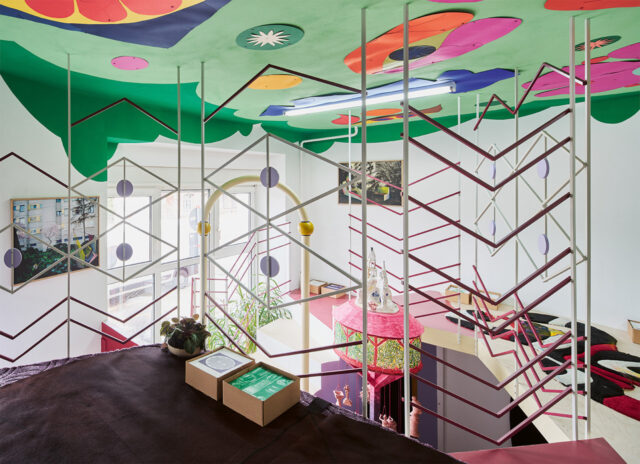
Merzbau-Garten,
2020, Foto: Joe Clark
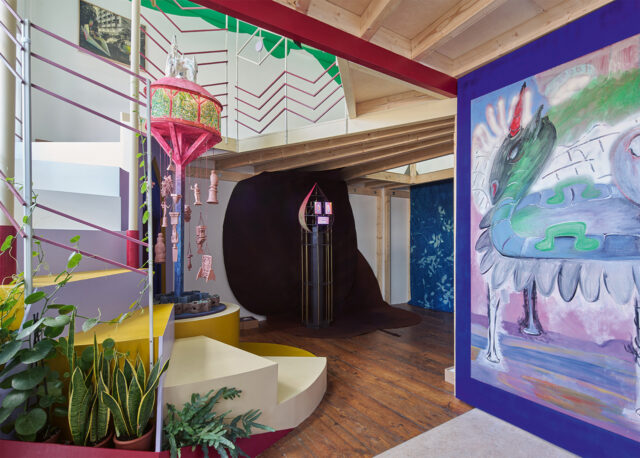
Merzbau-Garten,
Foto: Joe Clark
Der Begriff „Kunst“ ist spannend, da er für jede Person etwas anderes bedeuten kann. Gerade in der Diversität der Ansichten über „Kunst“ liegt ihre Kraft. Das macht sich auch in der freien Szene der Projekträume bemerkbar. Es werden die unterschiedlichsten Sichtweisen auf und über Kunst vertreten und nichts unterliegt der Geschmackslimitierung einer kleinen Elite. Das bedeutet eine große Vielfalt und Innovationsfreude an künstlerischer, kultureller Entwicklung. Die Projektraumarbeit verstärkt generell das Interesse an künstlerischen Prozessen und verlagert die Aufmerksamkeit vom Objekt hin zum Entstehungsprozess. − Was insbesondere Kunst in Projekträumen im öffentlichen Raum kann: Leute aus der Bevölkerung neugierig machen, sich die Kunst vor Ort anzuschauen, bei Gelegenheit den Kontakt zu Betreiber*innen und Künstler*innen aufzunehmen, mit ihnen ins Gespräch zu kommen, und: wiederzukommen. Also: die Begegnung mit Kunst im Alltag ermöglichen.
Für viele hat die Pandemie die Wichtigkeit der künstlerischen Tätigkeit in den Vordergrund gerückt trotz der Vernachlässigung der Kultur durch die Politik. Die Wichtigkeit der Vor-Ort-Präsenz, des „analogen Sehens“, der analogen Auseinandersetzung gegenüber den digitalen Formaten ist in den Vordergrund gerückt.
In den letzten zehn Jahren haben sich die Finanzierungsmöglichkeiten von Offspaces der bildenden Kunst sehr weiterentwickelt. Das betrifft nicht nur den Projektraumpreis oder die Basisförderung, sondern auch zum Beispiel die spartenoffene Förderung oder den Topf Präsentationen zeitgenössischer Kunst. Mit einer Kombination aus Getränkeverkäufen, Projektraumpreis, Basisförderung, Spartenoffener Förderung sowie ab und zu Raumvermietung war es uns möglich, unseren Raum zu finanzieren und selbst, ungenügend, entlohnt zu werden. Unsere künstlerisch-kuratorische Arbeit ist tatsächlich, wie der Name schon sagt, Arbeit, die angemessen vergütet werden sollte. Es ist falsch, Offspace-Arbeit ins Ehrenamt zu verdrängen. Hier wird derselbe Fehler wiederholt, der bei Künstler*innen gemacht wird. Jede andere Arbeit wird selbstverständlich entlohnt, nur die künstlerische nicht, da stehen wir noch am Anfang. Und auch bei Offspaces wird erwartet, dass die Menschen, die diese Räume gestalten und als Ressourcen zur Verfügung stellen, gar nichts bis wenig verdienen. Dabei sind Offspaces mit die ersten Anlaufstellen für Künstler*innen in Berlin. Es ist höchste Zeit, Honoraruntergrenzen für freie Kurator*innen und Offspace-Betreiber*innen festzulegen und Offspaces nicht nur als Nice-to-have oder Hobby von beruflich anderweitig beschäftigten oder reichen Menschen zu betrachten, sondern als einen tatsächlich professionellen Lebensinhalt. Dazu gehört auch, kuratorische Arbeit endlich als künstlerisch-publizistisch anzuerkennen und Kurator*innen/Offspace-Betreiber*innen in der Künstlersozialkasse zu versichern.