Auszeichnung
künstlerischer Projekträume
und -initiativen

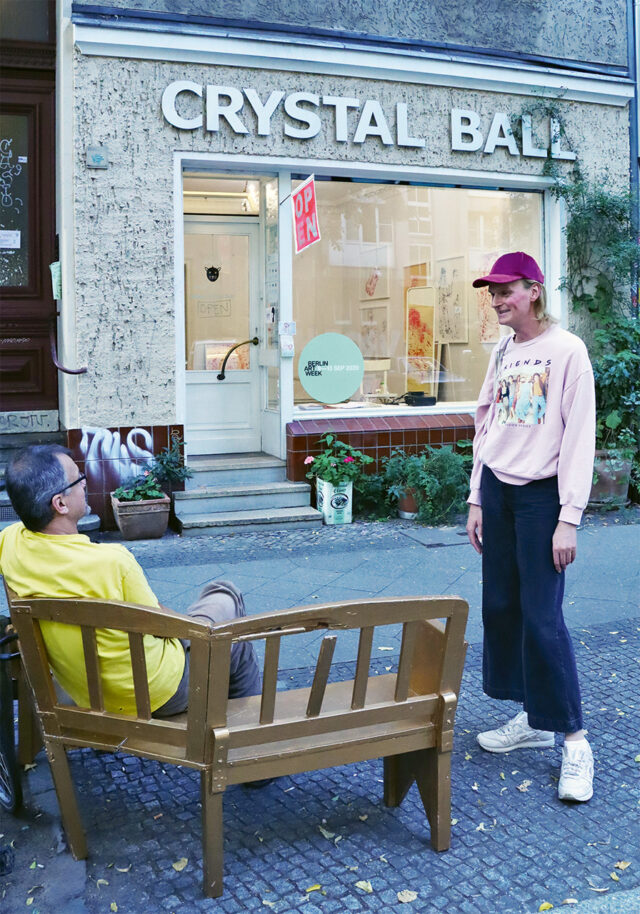
Crystal Ball

2007
Schönleinstraße
7
Berlin
10967

Außenansicht, 2020, Foto: Lydia Karstadt
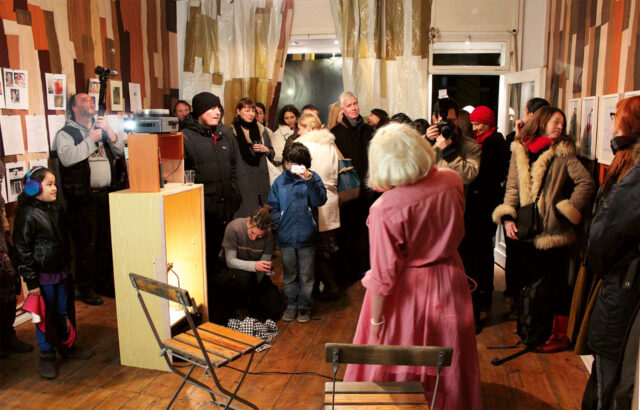
Kirsty Kross, Lost-and perhaps even possibly found, 2012

In the early years, we were not thinking so much about accessibility to our exhibitions and events in a physical sense of venues without elevators or events without translation, but also in a digital sense. For many years, our online magazine hadn’t been accessible for screen-readers for people with poor vision or the blind, or keyboard navigation for people with mobility issues, for example. Getting there was a journey, and I think we would now start from a more accessible place. I would want local politicians to make their funding applications more accessible, not only in terms of able-ism, but also in terms of all forms of discrimination, e.g. proof of citizenship, applications having to be written in German. I wish that they would give a universal basic income to everyone (not just citizens), open their borders, and make healthcare free, free for everyone.The commercialization of the contemporary art scene in the last decade has created alienation and dissociation from the audience. The social filters at the established exhibition spaces, the sterilization of methods of presentation, and over-professionalism have created an image and perception of inaccessibility. In that respect, project spaces and art initiatives that resist these dynamics and strive for keeping direct social contact maintain the political potential of artistic practice. We don’t promote the conventional star system in selecting the artists we are collaborating with; we don’t pursue a hierarchical method by employing an omnipotent curator; we value the critical content and formal experimentalism of the artworks rather than the conditions of their presentation, and we don’t sell any artworks in our space; we don’t invest our energy in commercial speculation. We put an emphasis on the collective and on the social. We keep contact with our immediate neighborhood (in Neukölln), and we prioritize the knowledge about and the cultural accumulation of a particular geography. Hence, we engage in a counter-position against the dominant dynamics that have shaped the field of the contemporary art scene in the last decade. The pandemic condition has also been a drastic element that forced actors in the field to reconsider methods of presentation and social contact.These try-outs should be understood not in abstract terms, but in the light of the current struggles with labor, housing, racism, homophobia, and anti-fascist positions. If politicians can facilitate these processes for us to work, that would be great. We would wish that the situation wouldn’t look as somber but reality is also knocking on the door of the art sphere. Can politicians regulate the price for studios and project spaces? Can they facilitate real financial support for diversity? Can they push a little bit further and understand the complex situation of art practitioners during and after the pandemic, and give some more support?