Auszeichnung
künstlerischer Projekträume
und -initiativen

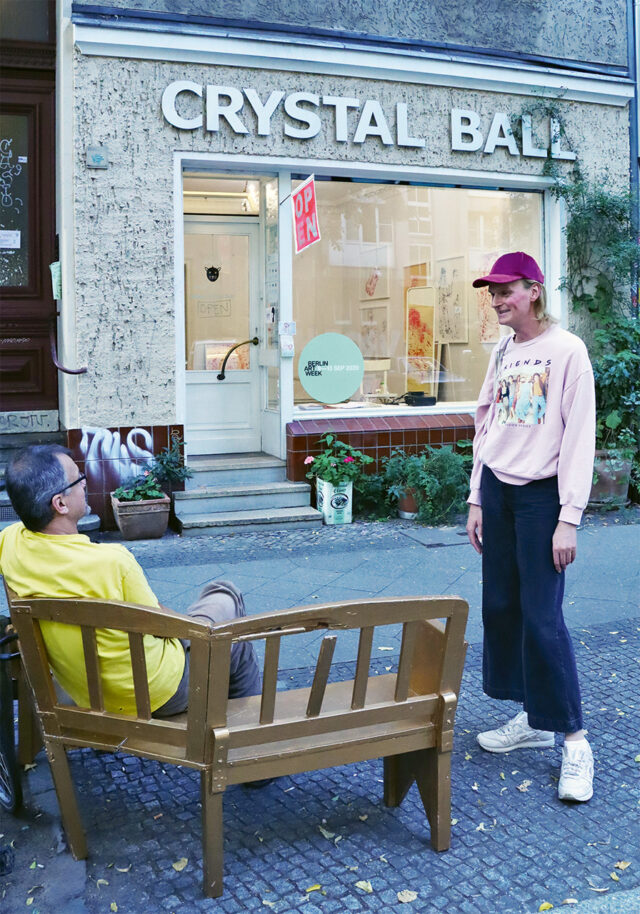
Crystal Ball

2007
Schönleinstraße
7
Berlin
10967

Außenansicht, 2020, Foto: Lydia Karstadt
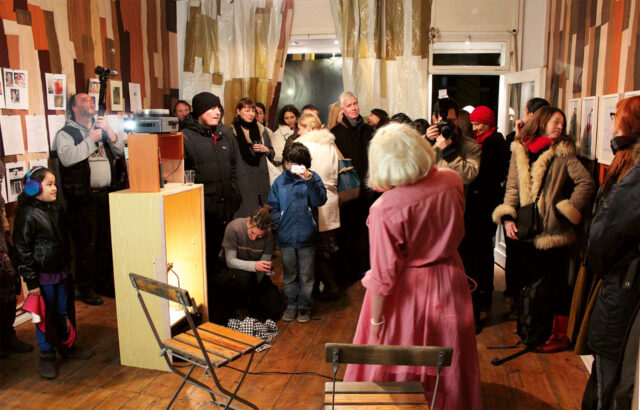
Kirsty Kross, Lost-and perhaps even possibly found, 2012

Answering this question seems to be the most difficult and an endless process for me because I have to ruminate on the past decade or so in which I have gone through Berlin as a female artist, a Korean artist, the founder and chief of an Asian contemporary art platform, and a mother. Since the very beginning, I have been interested in seeking a kind of universal identity, spanning the various backgrounds of ­Berlin-based contemporary artists in order to examine the question of identity as it is often perceived from the outside: according to gender, nationality, and cultural milieu. So I have created a space where the dichotomous logics about those issues could be discussed, proceeding with many projects. Above all, I had dreamt of creating a self-supporting space, based on an independent profit model. Recognizing limitations in workforce, culture, and the market of the art scene, however, I have experienced some moments of great suffering. But what has ­enabled me to endure those moments of suffering was not money but people, so that I would answer sincerely that a project space no longer means a physical space for me. It is a non-physical space, comprising people like artists, users and agents, or sometimes a network.The engagement and support from the Network has been vitally important to our growth and sustainability, and also our learning and understanding of the ­wider Berlin art scene beyond our micro-communities. For one thing, we have learned so much about the plurality of spaces and creative ­discourses in Berlin. But the open discussion that the Network allows with the Berlin Senate and one another has been really important in order to understand our needs as unique nodes in the artistic landscape of Berlin, and creative mutual goals for the sustainability and vitality of the community as a whole.Die Pandemie hat uns gezwungen, nicht nur mehr in den digitalen Raum zu expandieren, sondern uns darüber hinaus mehr Gedanken zu machen hinsichtlich eines barrierefreien Zugangs – insbesondere auch im digitalen Raum –, um ein möglichst breites Publikum mit unseren Ausstellungen, Performances, Veranstaltungen und Kinder-Workshops zu erreichen. Die Verwendung von Videos anstelle von Werktexten, die Verwendung von Leichter Sprache auf der Website sowie die Ausstellung als Spiel sind nur einige exemplarische Strategien, die wir während Corona dazu entwickelt haben – und beibehalten werden.