Auszeichnung
künstlerischer Projekträume
und -initiativen

ZK/U

Zentrum für Kunst und Urbanistik (KUNSTrePUBLIK e. V.)

2002
Siemensstraße
27
Berlin
10551

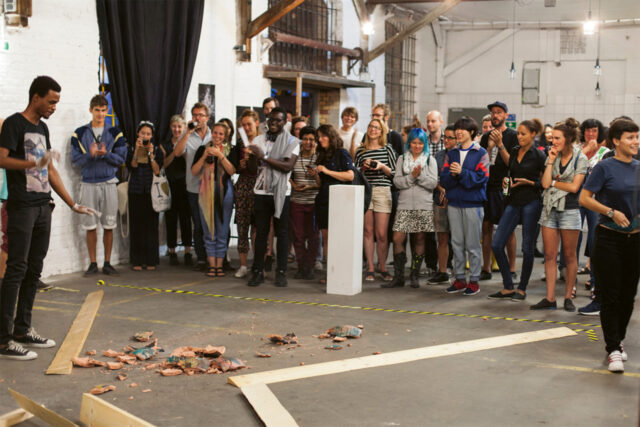
OpenHaus, 2015, Foto: Lisa Johanna Thiele
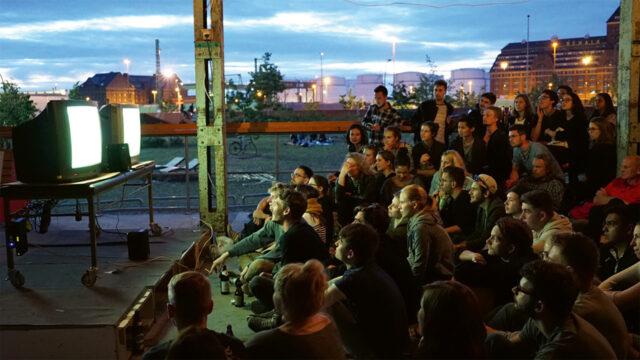
FUSSBALLABALLA, 2016, Foto: Tanja Knaus
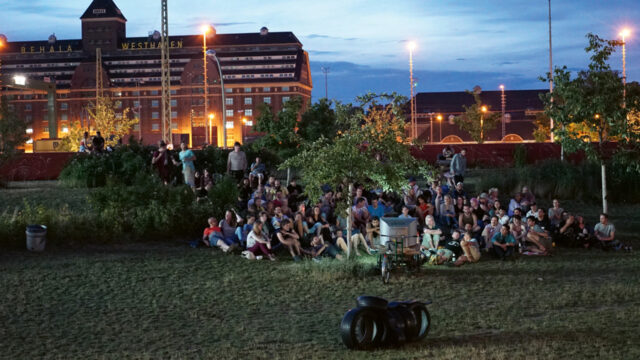
FB24, Foto: Tanja Knaus

Art has the unique ability to help us expand our imagination and the way we think about the world. By bending the lines of logic and ­rational approaches, it offers a gateway to our collective unconscious and provides a terrain where everything is possible, hence pushing our thinking process forward. We see art and artists as seismographs for changes in society. There is also great freedom in art, addressing big and timeless questions that are independent of current economic and political realities and interests. Art can be a space for utopias, or for histories outside of history books. Art is important because it keeps us going through the difficult and dark times. Art keeps us alive.To run a space is a form of appreciation of other artists, it is an outcome of friendship and mutual understanding; it is an indication of trust between all involved. To run a space means to take responsibility. To run a space is not only self-organization – money may not be vital to put up a show – but it is for sure necessary to animate a space and keep it alive. The prize comes due to hard and merited work, but maybe a grant would be more befitting than a prize? Maybe an iron scaffold holding up a structure in advance is better suited than a gold star for accomplishments? To run a space is a full time job. A group of artists who share their enthusiasm, interests, time, and skills would impart a project with a larger circulation of assignments between the makers. I am convinced that the longevity and success of a space relies on a horizontally organized (net) work.The city has become more expensive overall and therefore there is less free space – there are less “Freiräume”. Our definition has not changed as a project space. The concept of an ideal space is completely dependent on what the organizers/artists/curators are interested in doing. In our opinion, there isn’t ONE type of space that is ideal which is actually what is so wonderful about project spaces in general – they are diverse, and completely different. It seems that because of the lack of spaces and the increased rents, more project spaces have turned towards commercial models. But since funding has become more commonplace in the scene, meaning it’s more common to pay artists who are involved in shows, performances, readings, events, etc. at project spaces, this has put more pressure on spaces in general to have to secure financing. We would argue that since funding has become more readily available, the structures have begun to change. It’s a bit of a double-edged sword. It’s wonderful to receive funding and be able to support artists, and as a result, the scene has become much more professional. But at the same time, it is harder in some ways to do projects more spontaneously and in an improvised fashion. This, as a result, has changed the (power) dynamics between the artists and the project space organizers, as very often the organizers are NOT funded but the artists participating in the projects are. This creates a rather awkward dynamic and as organizers ourselves, it’s frustrating for us to not be paid for our efforts and contributions to the “Freie Szene”.