Auszeichnung
künstlerischer Projekträume
und -initiativen

Walden Kunstausstellungen

1995
Fuldastraße
56
Berlin
12043

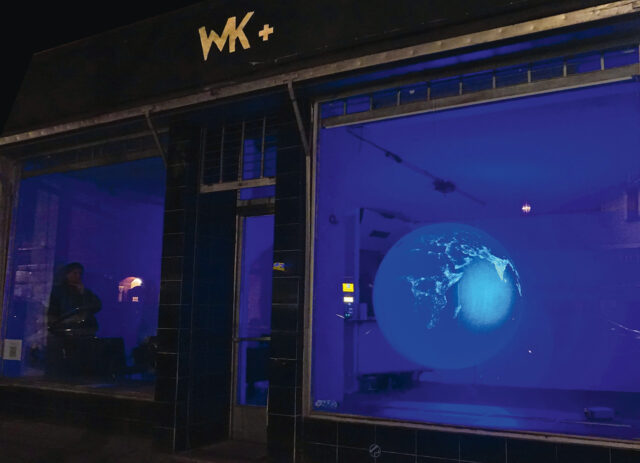
Antti Pussinen, Foto: Reinhold Gottwald

The city has become more expensive overall and therefore there is less free space – there are less “Freiräume”. Our definition has not changed as a project space. The concept of an ideal space is completely dependent on what the organizers/artists/curators are interested in doing. In our opinion, there isn’t ONE type of space that is ideal which is actually what is so wonderful about project spaces in general – they are diverse, and completely different. It seems that because of the lack of spaces and the increased rents, more project spaces have turned towards commercial models. But since funding has become more commonplace in the scene, meaning it’s more common to pay artists who are involved in shows, performances, readings, events, etc. at project spaces, this has put more pressure on spaces in general to have to secure financing. We would argue that since funding has become more readily available, the structures have begun to change. It’s a bit of a double-edged sword. It’s wonderful to receive funding and be able to support artists, and as a result, the scene has become much more professional. But at the same time, it is harder in some ways to do projects more spontaneously and in an improvised fashion. This, as a result, has changed the (power) dynamics between the artists and the project space organizers, as very often the organizers are NOT funded but the artists participating in the projects are. This creates a rather awkward dynamic and as organizers ourselves, it’s frustrating for us to not be paid for our efforts and contributions to the “Freie Szene”.… But definitely key words such as “project space”, “artist-run”, “grassroots”, “laboratory”, etc. are still good key words (to be constantly re-discussed) that underline the spirit and intention of such open experiments that somehow can only function as open experiments! A free interactive and inclusive format to create, express, and ex­change interdisciplinary ideas with spontaneous, playful, DIY approaches; having access to and exchanging various physical spaces to manifest all facets of what independent cultural production can unfold – also in the sense of creating social awareness and responsi­bility due to the fact that every single participant, no matter the “role” or “title” is deeply aware & involved in the process of making things happen, sharing responsibilities and profits (if there are any 🙂 … Investors and businesses assumed the form of faceless international partnerships with enormous capital and devouring public resources deciding on the future of all citizens, delivering less and less social protection and consideration for cultural and social diversity.In the early years, we were not thinking so much about accessibility to our exhibitions and events in a physical sense of venues without elevators or events without translation, but also in a digital sense. For many years, our online magazine hadn’t been accessible for screen-readers for people with poor vision or the blind, or keyboard navigation for people with mobility issues, for example. Getting there was a journey, and I think we would now start from a more accessible place. I would want local politicians to make their funding applications more accessible, not only in terms of able-ism, but also in terms of all forms of discrimination, e.g. proof of citizenship, applications having to be written in German. I wish that they would give a universal basic income to everyone (not just citizens), open their borders, and make healthcare free, free for everyone.