Auszeichnung
künstlerischer Projekträume
und -initiativen

Sonntag

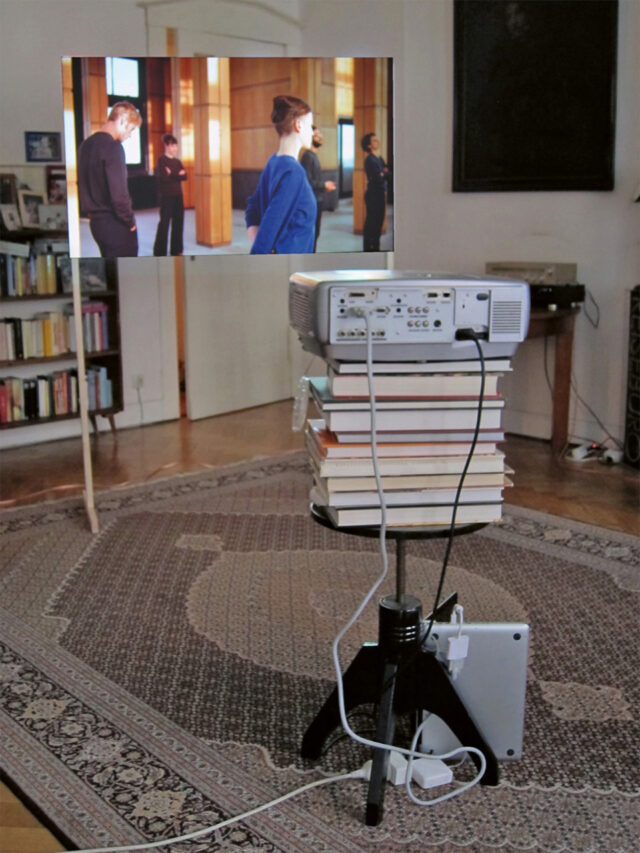
Paul Hendrikse, Looking while listening, 29.03.2016, Foto: Ayala Gazit
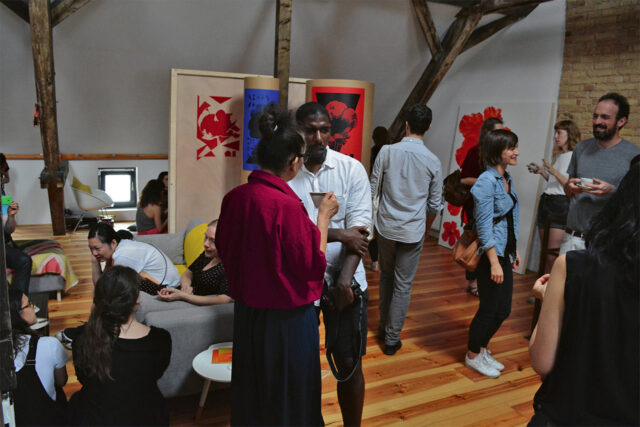
Alon Levin, Preparations for a Dictator, 18.08.2016, Foto: Ayala Gazit

Answering this question seems to be the most difficult and an endless process for me because I have to ruminate on the past decade or so in which I have gone through Berlin as a female artist, a Korean artist, the founder and chief of an Asian contemporary art platform, and a mother. Since the very beginning, I have been interested in seeking a kind of universal identity, spanning the various backgrounds of ­Berlin-based contemporary artists in order to examine the question of identity as it is often perceived from the outside: according to gender, nationality, and cultural milieu. So I have created a space where the dichotomous logics about those issues could be discussed, proceeding with many projects. Above all, I had dreamt of creating a self-supporting space, based on an independent profit model. Recognizing limitations in workforce, culture, and the market of the art scene, however, I have experienced some moments of great suffering. But what has ­enabled me to endure those moments of suffering was not money but people, so that I would answer sincerely that a project space no longer means a physical space for me. It is a non-physical space, comprising people like artists, users and agents, or sometimes a network.Kunst ist ein dialogischer Prozess, der zwischen Kunstschaffenden und Rezipient*innen entsteht. Ihn lebendig zu halten, offen für Fragen, Irritationen und Handlungsmöglichkeiten. Sowie auto­nom arbeitenden Künstler*innen einen Raum zu geben, das sehen wir als unsere Aufgabe an.Prinzipiell ist unsere Haltung heute, dass wir honorierte Arbeit − ob nun für die Infrastruktur oder ­einzelne Inhalte und ­Formate, ob für uns oder Dritte, mit denen wir arbeiten − als Prinzip anstreben.