Auszeichnung
künstlerischer Projekträume
und -initiativen
Auszeichnung
künstlerischer Projekträume
und -initiativen
Archiv
:
2023
,
2022
,
2021
,
2020
,
2019
,
2018
,
2017
,
2016
,
2015
,
2014
,
2013
,
2012
Events
Archiv
Information
Stipendien 2021
Stipendien 2022
Statements
Rückblick
Kontakt
Impressum
2020
,
PELES EMPIRE
2020
,
2005
Karl-Marx-Straße
58
Berlin
12043
pelesempire.com
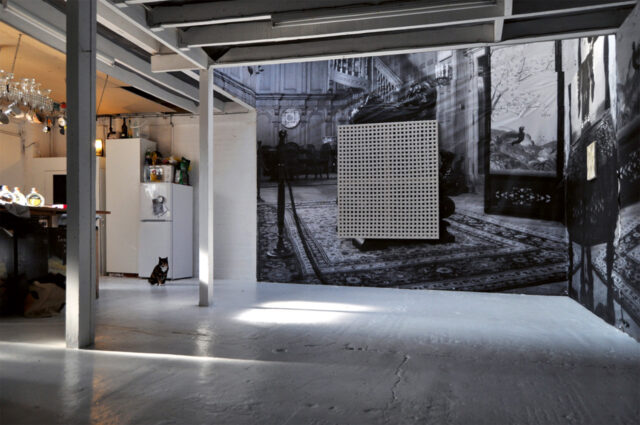
Daniel Sinsel, Wandarbeit, Ausstellungsraum London, 2011–2014
Der Begriff „Kunst“ ist spannend, da er für jede Person etwas anderes bedeuten kann. Gerade in der Diversität der Ansichten über „Kunst“ liegt ihre Kraft. Das macht sich auch in der freien Szene der Projekträume bemerkbar. Es werden die unterschiedlichsten Sichtweisen auf und über Kunst vertreten und nichts unterliegt der Geschmackslimitierung einer kleinen Elite. Das bedeutet eine große Vielfalt und Innovationsfreude an künstlerischer, kultureller Entwicklung. Die Projektraumarbeit verstärkt generell das Interesse an künstlerischen Prozessen und verlagert die Aufmerksamkeit vom Objekt hin zum Entstehungsprozess. − Was insbesondere Kunst in Projekträumen im öffentlichen Raum kann: Leute aus der Bevölkerung neugierig machen, sich die Kunst vor Ort anzuschauen, bei Gelegenheit den Kontakt zu Betreiber*innen und Künstler*innen aufzunehmen, mit ihnen ins Gespräch zu kommen, und: wiederzukommen. Also: die Begegnung mit Kunst im Alltag ermöglichen.
To run a space is a form of appreciation of other artists, it is an outcome of friendship and mutual understanding; it is an indication of trust between all involved. To run a space means to take responsibility. To run a space is not only self-organization – money may not be vital to put up a show – but it is for sure necessary to animate a space and keep it alive. The prize comes due to hard and merited work, but maybe a grant would be more befitting than a prize? Maybe an iron scaffold holding up a structure in advance is better suited than a gold star for accomplishments? To run a space is a full time job. A group of artists who share their enthusiasm, interests, time, and skills would impart a project with a larger circulation of assignments between the makers. I am convinced that the longevity and success of a space relies on a horizontally organized (net) work.
So ist der ideale Projektraum vor allem ein Raum, in dem der Wert eines Werkes nicht durch seinen Verkauf definiert wird.