Auszeichnung
künstlerischer Projekträume
und -initiativen

oqbo

raum für bild wort und ton

2008
Brunnenstraße
63
Berlin
13355

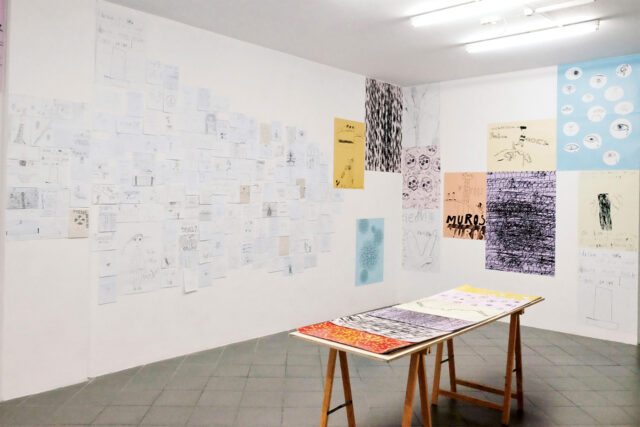
What’s love gonna do with it, Geschichte \ Erinnerung \ Öffentlicher Raum, 2020
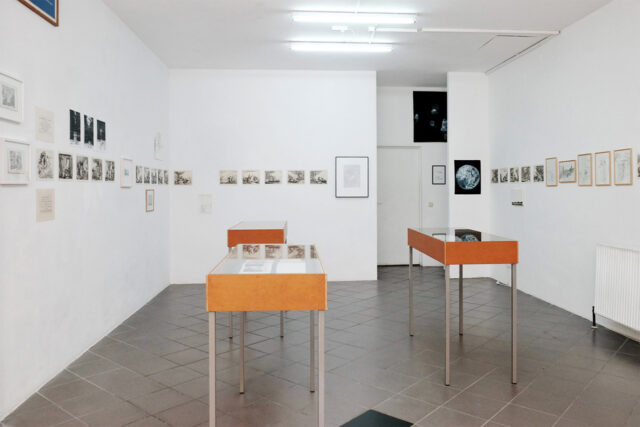
Außer vielleicht eine Konstellation, Hommage à Giandomenico Tiepolo, 2020
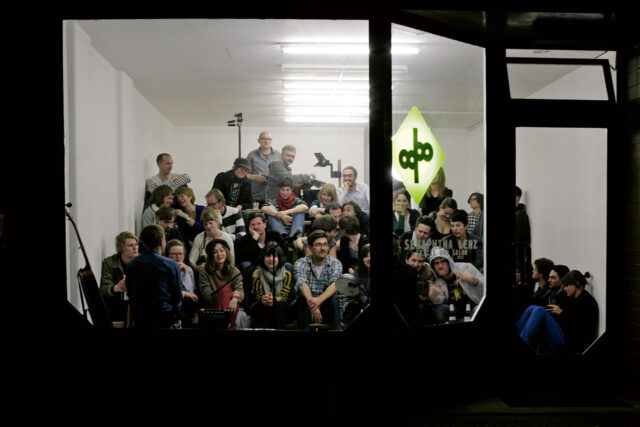
Seraphina Lenz, Skizze und Salon, 2012, Lesekonzert D. Seel, R. Scheffler, A.Töpfer, Foto: K. Zimmermann

The art scene, spaces, artists, and initiators in the past ten years (being a continuum of what has gone before) in a nutshell, can be seen to have changed from individual authorships to more collective ones. They act in opposition to the anonymized corporate structures, in particular the giant housing conglomerates (these destructive collective edifices that have the same legal rights as a sentient individual human being) that threaten to dissemble the unique fabric of the city of Berlin that provided a fertile ground in which these initiatives could rise, connect, and thrive. So the project room scene provides a positive counter-weight to these destructive development processes as a living, breathing, collaborative, and inclusive network. I hope that this fabulous project room network does not drown in the indifference of mainstream political thinking in the city of Berlin.Answering this question seems to be the most difficult and an endless process for me because I have to ruminate on the past decade or so in which I have gone through Berlin as a female artist, a Korean artist, the founder and chief of an Asian contemporary art platform, and a mother. Since the very beginning, I have been interested in seeking a kind of universal identity, spanning the various backgrounds of ­Berlin-based contemporary artists in order to examine the question of identity as it is often perceived from the outside: according to gender, nationality, and cultural milieu. So I have created a space where the dichotomous logics about those issues could be discussed, proceeding with many projects. Above all, I had dreamt of creating a self-supporting space, based on an independent profit model. Recognizing limitations in workforce, culture, and the market of the art scene, however, I have experienced some moments of great suffering. But what has ­enabled me to endure those moments of suffering was not money but people, so that I would answer sincerely that a project space no longer means a physical space for me. It is a non-physical space, comprising people like artists, users and agents, or sometimes a network.Ashley started out as a self-funded project. This allowed presenting art in a self-determined way, especially by working artists not part of the commercial art market but also those flying under the radar of larger public institutions. Of course, this model also brought up the question of sustainability. In the last few years, with rising rents and spaces closing down, this question has become more and more pressing for everyone on the free scene. Winning the project space prize in 2018 was a pivotal moment for Ashley, particularly because beyond recognizing the work done by independently-run spaces, the prize money could be spread over several years to keep our program running. However, a prize also follows the logic of exceptionality which puts a lot of pressure on project spaces to ‘perform’. Hence, the structural funding program by the Senate significantly changed the conditions of our work because by ­confronting us with the administrative work inherent in public funding, we evolved our own internal structure to accommodate longer-term planning while still maintaining the flexibility needed to track the subtle changes in the art communities around us. Before this program, going from project to project rather than planning two years ahead, it was difficult to apply for project funding due to the fact that application deadlines are often one year in advance and therefore difficult to meet if you are not a publicly-funded institution or commercial project with the resources to plan several months or even a year ahead. So this program does help a lot to allow project spaces to stake a claim on public art funding. At the same time, with the structural funding approved on a two-year basis, it remains unclear how this mode of operating will last a few years, or even one year into the future.