Auszeichnung
künstlerischer Projekträume
und -initiativen

Horse & Pony

2013
Altenbraker Straße
18
Berlin
12053
Horse & Pony, gegründet 2013 von Carrick Bell and Rocco Ruglio-Misurell, ist ein nicht kommerzieller, von Künstler:innen geführter Projektraum in Neukölln. Die Mission ist es, Künstler:- und Kurator:innen einen Raum für Experimente und Entwicklungen zu bieten und den kreativen Austausch mit anderen Räumen zu erleichtern. Wir hoffen, dass dies dazu ermutigt, außerhalb der typischen Arbeitsmodi aktiv zu werden, was beispielsweise zu von Künstler:innen
kuratierten Projekten führt, die sonst keinen geeigneten Ausstellungsort finden würden. Xanadu ist ein Raum für Bewegtbildarbeiten, der im Horse & Pony angesiedelt ist und dient als Plattform für verschiedene Herangehensweisen an das Format der Einzelbildprojektion.
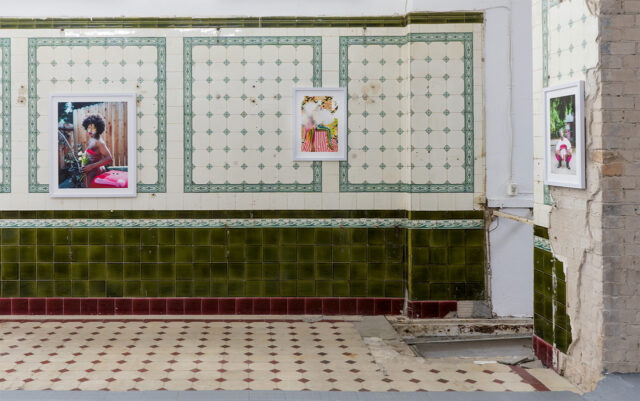
Derick Decario Ladale Whitson, Cheryl Donegan, Hell Yes, 2021, Foto: Rocco Ruglio Misurell

Even though COVEN doesn’t have our own project space (although we are thinking about getting a ­studio …), we make space, mainly for our queer community in Berlin and online. We make space to come together, meet each other, talk about stuff, and laugh. We try to pay as many queers as we can to make art with us. To think about art, to question art. Art for us has always been about creating community and offer alternatives to worn-out narratives. We like art for its world-making capacity.Das Netzwerk ist wichtig, jedoch vielen Leuten nicht sehr bekannt. Es müsste medial präsenter auftreten, also sichtbarer werden, auch unabhängig von der Preisvergabe.The city has become more expensive overall and therefore there is less free space – there are less “Freiräume”. Our definition has not changed as a project space. The concept of an ideal space is completely dependent on what the organizers/artists/curators are interested in doing. In our opinion, there isn’t ONE type of space that is ideal which is actually what is so wonderful about project spaces in general – they are diverse, and completely different. It seems that because of the lack of spaces and the increased rents, more project spaces have turned towards commercial models. But since funding has become more commonplace in the scene, meaning it’s more common to pay artists who are involved in shows, performances, readings, events, etc. at project spaces, this has put more pressure on spaces in general to have to secure financing. We would argue that since funding has become more readily available, the structures have begun to change. It’s a bit of a double-edged sword. It’s wonderful to receive funding and be able to support artists, and as a result, the scene has become much more professional. But at the same time, it is harder in some ways to do projects more spontaneously and in an improvised fashion. This, as a result, has changed the (power) dynamics between the artists and the project space organizers, as very often the organizers are NOT funded but the artists participating in the projects are. This creates a rather awkward dynamic and as organizers ourselves, it’s frustrating for us to not be paid for our efforts and contributions to the “Freie Szene”.