Auszeichnung
künstlerischer Projekträume
und -initiativen
Auszeichnung
künstlerischer Projekträume
und -initiativen
Archiv
:
2023
,
2022
,
2021
,
2020
,
2019
,
2018
,
2017
,
2016
,
2015
,
2014
,
2013
,
2012
Events
Archiv
Information
Stipendien 2021
Stipendien 2022
Statements
Rückblick
Kontakt
Impressum
2016
,
grüntaler9
2016
,
2011
Grüntaler Straße
9
Berlin
13357
gruentaler9.com
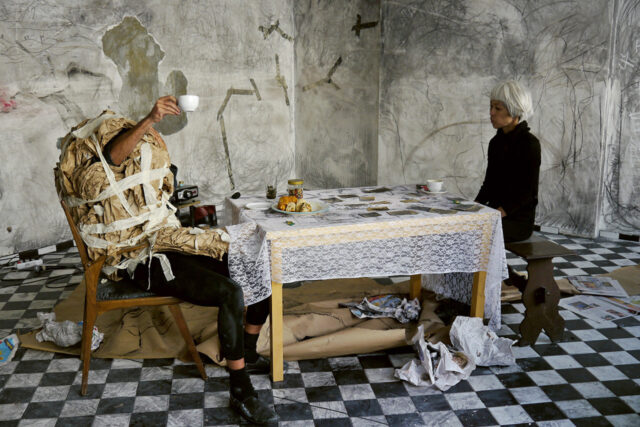
Nikhil Chopra & Yuko Kaseki,
9 Performance,
2011, Foto: Teena Lange
Es sollten möglichst einfache, kurzfristige Förderungen entwickelt werden, die dem Geist künstlerischer Aktionen entgegenkommen.
The pandemic gave us a pause and became a forced hiatus. For us, it didn’t make sense to organize events or to move into the digital space during the last year. A willingness to think outside the box, to implement short-term funding, and to listen to the needs of the community. Not everyone requires long term investments; others would like to apply for EUR 500 to develop a project for next month. These quick, low-cost funding opportunities are not clearly available yet. When implementing initiatives, first think about the places and the people you are trying to serve. Requiring project spaces to have a program mapped out six months in advance, or ask for only German-language applications is not responding to the community.
The commercialization of the contemporary art scene in the last decade has created alienation and dissociation from the audience. The social filters at the established exhibition spaces, the sterilization of methods of presentation, and over-professionalism have created an image and perception of inaccessibility. In that respect, project spaces and art initiatives that resist these dynamics and strive for keeping direct social contact maintain the political potential of artistic practice. We don’t promote the conventional star system in selecting the artists we are collaborating with; we don’t pursue a hierarchical method by employing an omnipotent curator; we value the critical content and formal experimentalism of the artworks rather than the conditions of their presentation, and we don’t sell any artworks in our space; we don’t invest our energy in commercial speculation. We put an emphasis on the collective and on the social. We keep contact with our immediate neighborhood (in Neukölln), and we prioritize the knowledge about and the cultural accumulation of a particular geography. Hence, we engage in a counter-position against the dominant dynamics that have shaped the field of the contemporary art scene in the last decade. The pandemic condition has also been a drastic element that forced actors in the field to reconsider methods of presentation and social contact.