Auszeichnung
künstlerischer Projekträume
und -initiativen
Auszeichnung
künstlerischer Projekträume
und -initiativen
Archiv
:
2023
,
2022
,
2021
,
2020
,
2019
,
2018
,
2017
,
2016
,
2015
,
2014
,
2013
,
2012
Events
Archiv
Information
Stipendien 2021
Stipendien 2022
Statements
Rückblick
Kontakt
Impressum
2019
,
EVBG
(exciting ventures by beckmann and gaspard)
2019
,
2015
Initiative
evbg.org
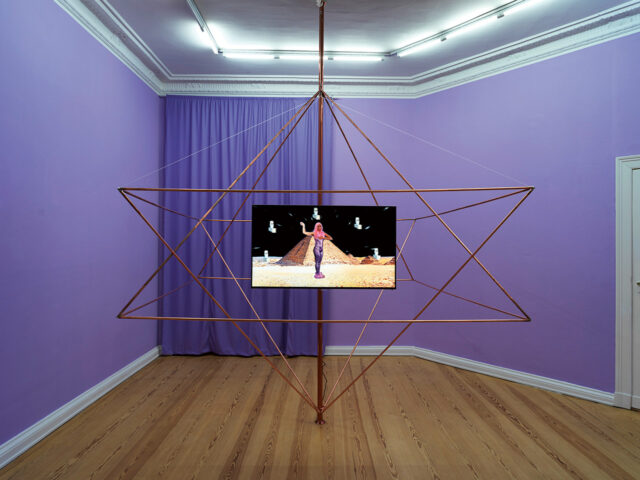
Tabita Rezaire,
Riding Infinity,
Installationsansicht, PSM Gallery, 2018
Wenn die Stadt verkauft ist, erübrigen sich alle weiteren Fragen.
Die unweigerlich fortschreitende Gentrifizierung schränkt die künstlerischen Freiräume weiter ein. Dank des Engagements des Netzwerks freier Berliner Projekträume und -initiativen wurde die Szene jedoch zum Politikum, erreichte eine breitere Öffentlichkeit und erfuhr zudem durch neu eingerichtete Fördermöglichkeiten eine wirtschaftliche Stärkung. Die Vernetzung führte neben dem inhaltlichen Austausch zu verschiedensten Kooperationen und insbesondere zu einem solidarischen Kollektivbewusstsein. Insofern ist die Szene ähnlich vital wie in den 1990er-Jahren, zwar nicht mehr so spontan und verrückt, aber dafür um einiges professioneller. Das Selbstverständnis der freien Projekträume wandelte sich tendenziell von der Eventkultur des Nachwendeberlins zu einem diskursorientierten Ansatz in institutionsähnlichen Strukturen. Abgesehen davon, dass die meisten Projektraumbetreiber*innen selbst Künstler*innen sind, wurde die Zusammenarbeit von Organisator*innen und rein kreativ Schaffenden verbindlicher und seriöser. Wichtig ist hierbei auch die obligatorische Auszahlung von Ausstellungshonoraren als wirtschaftliche Anerkennung für künstlerische Leistungen. Die Veränderung der Strukturen erfolgte fließend.
„Und so lange die Länge reicht Die werke der_die dichter und Innen die bildner und Innen und innen darstellen die künste multimed und überhaupt enthalten unerkanntermaßen einen Schatz tiefer Weisheit: eben weil. Aus ihnen die weisheit der natur der dinge selbst redet deren aus sie sagen sie bloß durch verdeut und lichtung und reinere wieder und holung verdolmetschen. Deshalb muss aber frei ich und du auch jeder_jede der_die das gedicht liest das kunstwerk betrachtet aus eigenen mitteln beitragen jene weisheit zu tage zu fördern. Folglich fasst er_sie nur so viel als seinen_deine fähigkeit und seine_unsere_ihre bildung es zulässt wie ins tiefe meer jeder schiffer sein jede schifferin ihre senkblume so tief hinab lässt als dessen_deren länge reicht.“ Gedicht: Elisa Asenbaum, frei nach Arthur Schopenhauer Kunst ist integrativ, kann aber genauso schnell vereinnahmt werden. Daher ist es notwendig, durch unabhängige Projekträume Strukturen zu schaffen, die die Autonomie der Kunst erhalten und stärken und die Produktion von Kunst jenseits von ökonomischen oder gesellschaftlichen Zwängen und Gegebenheiten ermöglichen. Nur so kann Kunst ihre gesellschaftliche Aufgabe erfüllen, die idealerweise unbestimmt und wandelbar ist.