Auszeichnung
künstlerischer Projekträume
und -initiativen

Errant Sound

2010
Rungestraße
20
Berlin
10179

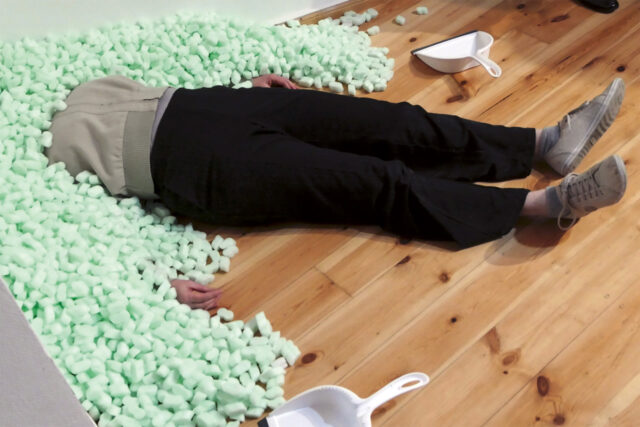
Janine Eisenächer & Steffi Weismann, Ready Making #1, 2019, Foto: Janine Eisenächer & Steffi Weismann
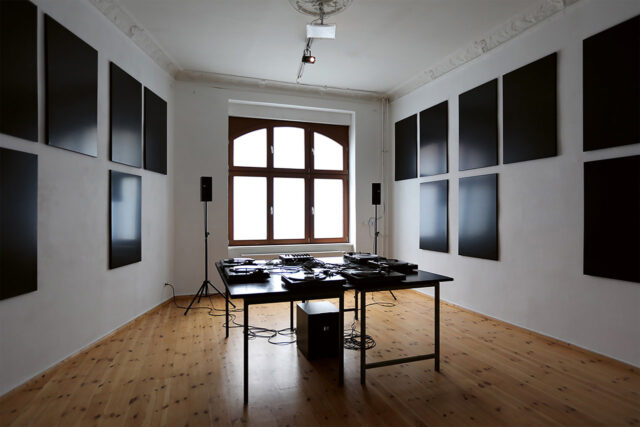
Erik Smith, Titanic, Displacements, 2019, Foto: Erik Smith

In the early years, we were not thinking so much about accessibility to our exhibitions and events in a physical sense of venues without elevators or events without translation, but also in a digital sense. For many years, our online magazine hadn’t been accessible for screen-readers for people with poor vision or the blind, or keyboard navigation for people with mobility issues, for example. Getting there was a journey, and I think we would now start from a more accessible place. I would want local politicians to make their funding applications more accessible, not only in terms of able-ism, but also in terms of all forms of discrimination, e.g. proof of citizenship, applications having to be written in German. I wish that they would give a universal basic income to everyone (not just citizens), open their borders, and make healthcare free, free for everyone.Art has the unique ability to help us expand our imagination and the way we think about the world. By bending the lines of logic and ­rational approaches, it offers a gateway to our collective unconscious and provides a terrain where everything is possible, hence pushing our thinking process forward. We see art and artists as seismographs for changes in society. There is also great freedom in art, addressing big and timeless questions that are independent of current economic and political realities and interests. Art can be a space for utopias, or for histories outside of history books. Art is important because it keeps us going through the difficult and dark times. Art keeps us alive.Nun, spätestens seit Beuys wissen wir von der Kunst als „sozialer Plastik“ − Kunst sollte in alle Bereiche unseres Lebens einfließen, um das Leben kreativer, sozialer und besser zu machen. Doch durch die extreme Kommerzialisierung des Kunstmarktes, der den Markt möglichst klein und exklusiv halten will, um so für einige wenige Künstler*innen extrem hohe Preise zu erzielen, wird die Kunstszene auf wenige Akteur*innen beschränkt: ein paar sehr große internationale kommerzielle Galerien, Auktionshäuser, Museen, große Sammler*innen oder auch Wertanlagen für Fonds und Unternehmen usw. Um die Kunst jedoch in unser aller Leben zu integrieren, muss dieser in sich geschlossene exklusive High-Art-Market aufgebrochen werden. Die Kunstszene muss sowohl für ein breites Publikum als auch für eine Vielzahl von unterschiedlichen Künstler*innen zugänglich sein. Diese Aufgabe können Projekträume am besten leisten, weil sie die Vielfalt und Diversität der zeitgenössischen Kunstszene am besten widerspiegeln.