Auszeichnung
künstlerischer Projekträume
und -initiativen
Auszeichnung
künstlerischer Projekträume
und -initiativen
Archiv
:
2023
,
2022
,
2021
,
2020
,
2019
,
2018
,
2017
,
2016
,
2015
,
2014
,
2013
,
2012
Events
Archiv
Information
Stipendien 2021
Stipendien 2022
Statements
Rückblick
Kontakt
Impressum
2015
,
die raum
2018
,
2015
,
2011
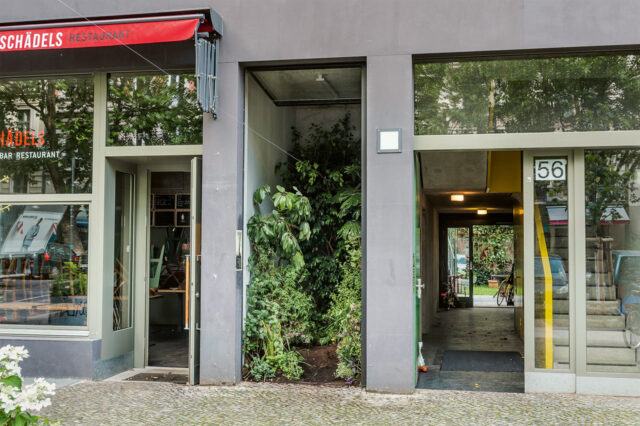
Oderberger Straße
56
Berlin
10435
dieraum.net
João Modé,
Land,
2014, Foto: Jan Windszus
In the early years, we were not thinking so much about accessibility to our exhibitions and events in a physical sense of venues without elevators or events without translation, but also in a digital sense. For many years, our online magazine hadn’t been accessible for screen-readers for people with poor vision or the blind, or keyboard navigation for people with mobility issues, for example. Getting there was a journey, and I think we would now start from a more accessible place. I would want local politicians to make their funding applications more accessible, not only in terms of able-ism, but also in terms of all forms of discrimination, e.g. proof of citizenship, applications having to be written in German. I wish that they would give a universal basic income to everyone (not just citizens), open their borders, and make healthcare free, free for everyone.
For many decades Berlin has developed a lively, diverse, and independent way of producing culture and counteracting government decisions, based on, local, generous, and enthusiastic, but also worried, social communities that exchanged resources and ideas within a larger political debate. The city became a “natural” shelter and fertile environment for dissidents, artists, political refugees, and immigrants with any background also due to the need to overcome a traumatic past full of human generated atrocities that are still present in people memories and behaviour.
The art scene, spaces, artists, and initiators in the past ten years (being a continuum of what has gone before) in a nutshell, can be seen to have changed from individual authorships to more collective ones. They act in opposition to the anonymized corporate structures, in particular the giant housing conglomerates (these destructive collective edifices that have the same legal rights as a sentient individual human being) that threaten to dissemble the unique fabric of the city of Berlin that provided a fertile ground in which these initiatives could rise, connect, and thrive. So the project room scene provides a positive counter-weight to these destructive development processes as a living, breathing, collaborative, and inclusive network. I hope that this fabulous project room network does not drown in the indifference of mainstream political thinking in the city of Berlin.