Auszeichnung
künstlerischer Projekträume
und -initiativen

die raum

2011
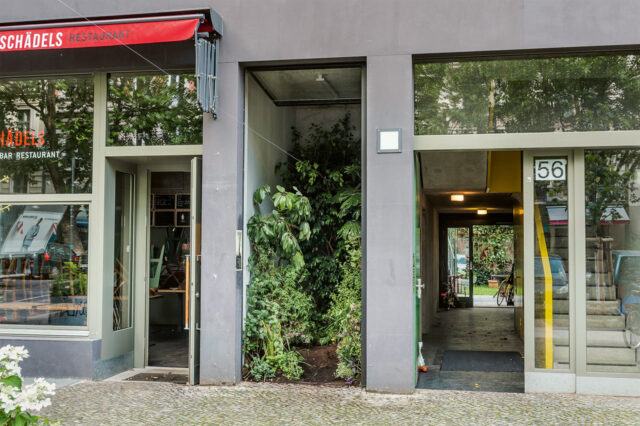
Oderberger Straße
56
Berlin
10435

João Modé, Land, 2014, Foto: Jan Windszus

Ashley started out as a self-funded project. This allowed presenting art in a self-determined way, especially by working artists not part of the commercial art market but also those flying under the radar of larger public institutions. Of course, this model also brought up the question of sustainability. In the last few years, with rising rents and spaces closing down, this question has become more and more pressing for everyone on the free scene. Winning the project space prize in 2018 was a pivotal moment for Ashley, particularly because beyond recognizing the work done by independently-run spaces, the prize money could be spread over several years to keep our program running. However, a prize also follows the logic of exceptionality which puts a lot of pressure on project spaces to ‘perform’. Hence, the structural funding program by the Senate significantly changed the conditions of our work because by ­confronting us with the administrative work inherent in public funding, we evolved our own internal structure to accommodate longer-term planning while still maintaining the flexibility needed to track the subtle changes in the art communities around us. Before this program, going from project to project rather than planning two years ahead, it was difficult to apply for project funding due to the fact that application deadlines are often one year in advance and therefore difficult to meet if you are not a publicly-funded institution or commercial project with the resources to plan several months or even a year ahead. So this program does help a lot to allow project spaces to stake a claim on public art funding. At the same time, with the structural funding approved on a two-year basis, it remains unclear how this mode of operating will last a few years, or even one year into the future.Art has the unique ability to help us expand our imagination and the way we think about the world. By bending the lines of logic and ­rational approaches, it offers a gateway to our collective unconscious and provides a terrain where everything is possible, hence pushing our thinking process forward. We see art and artists as seismographs for changes in society. There is also great freedom in art, addressing big and timeless questions that are independent of current economic and political realities and interests. Art can be a space for utopias, or for histories outside of history books. Art is important because it keeps us going through the difficult and dark times. Art keeps us alive.„Und so lange die Länge reicht Die werke der_die dichter und Innen die bildner und Innen und innen darstellen die künste multimed und überhaupt enthalten unerkanntermaßen einen Schatz tiefer Weisheit: eben weil. Aus ihnen die weisheit der natur der dinge selbst redet deren aus sie sagen sie bloß durch verdeut und lichtung und reinere wieder und holung verdolmetschen. Deshalb muss aber frei ich und du auch jeder_jede der_die das gedicht liest das kunstwerk betrachtet aus eigenen mitteln beitragen jene weisheit zu tage zu fördern. Folglich fasst er_sie nur so viel als ­seinen_deine fähigkeit und seine_unsere_ihre bildung es zulässt wie ins tiefe meer jeder schiffer sein jede schifferin ihre senkblume so tief hinab lässt als dessen_deren länge reicht.“ Gedicht: Elisa Asenbaum, frei nach Arthur Schopenhauer Kunst ist integrativ, kann aber genauso schnell vereinnahmt werden. Daher ist es notwendig, durch unabhängige Projekträume Strukturen zu schaffen, die die Autonomie der Kunst erhalten und stärken und die Produktion von Kunst jenseits von ökonomischen oder gesellschaftlichen Zwängen und Gegebenheiten ermöglichen. Nur so kann Kunst ihre gesellschaftliche Auf­gabe erfüllen, die idealerweise unbestimmt und wandelbar ist.