Auszeichnung
künstlerischer Projekträume
und -initiativen

Datscha Radio

2012
Initiative

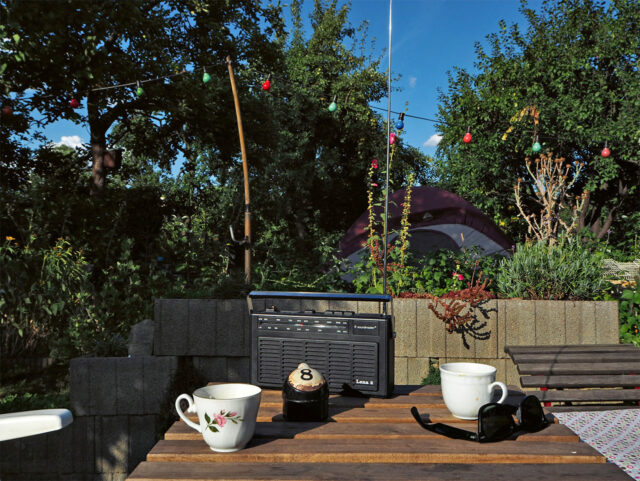
Nachtgärtnern II: Fragrances & Frequencies, 2019, Foto: Helen Thein
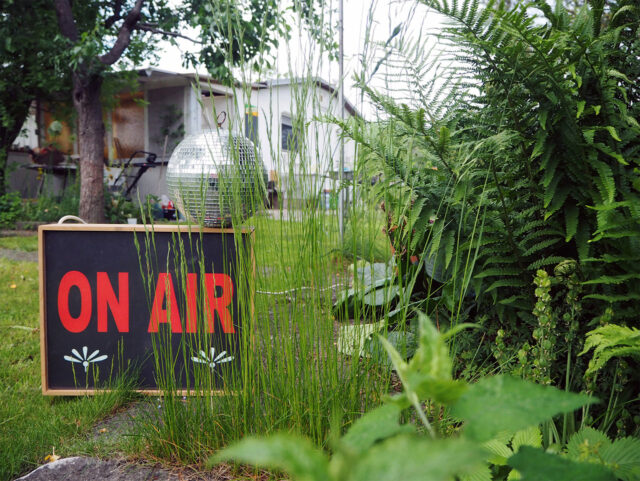
Gabi Schaffner, On Air. Die Datscha und das Radio, 2018, Foto: Gabi Schaffner

Heute wie damals würden wir die Bedeutung des Raumes selbst als primären ­Einfluss auf die Art der Initiative betonen. Das bedeutet auch, dass eine andere räumliche Konfiguration möglicherweise ein ganz anderes Ergebnis hervorbringen könnte. Wir würden immer noch empirisch und experimentell vorgehen und das Projekt lang­sam aus seinen Versuchen, Fehlern und Glückstreffern entstehen lassen. Von der Politik wünschen wir uns mehr Unterstützung beim Thema Immobilienspekulation und bessere Gewerbeverträge. Die Herausforderung nach Corona ist es, neue Situationen der Geselligkeit zu schaffen, die offen und sicher zugleich sind. Das ist kein Ziel, sondern eine Voraussetzung für unsere zukünftige ­Existenz.Von der Kulturpolitik wünschen wir uns eine Bestätigung der Leistungen der Projektraummacher*innen durch Vernachhaltigung der Fördermöglichkeiten, gemeinsames Ent­wickeln neuer Tools zur Förderung und offenen Dialog auf Augenhöhe. Wir alle sind an einer lebendigen Kulturszene in Berlin ­interessiert; sie erzeugt Synergien und Sogwirkung. Wir alle können dazu beitragen, dass sich Lebensrealitäten von Künstler*innen und Projektmacher*innen verbessern, jede*r mit den eigenen Mitteln.The commercialization of the contemporary art scene in the last decade has created alienation and dissociation from the audience. The social filters at the established exhibition spaces, the sterilization of methods of presentation, and over-professionalism have created an image and perception of inaccessibility. In that respect, project spaces and art initiatives that resist these dynamics and strive for keeping direct social contact maintain the political potential of artistic practice. We don’t promote the conventional star system in selecting the artists we are collaborating with; we don’t pursue a hierarchical method by employing an omnipotent curator; we value the critical content and formal experimentalism of the artworks rather than the conditions of their presentation, and we don’t sell any artworks in our space; we don’t invest our energy in commercial speculation. We put an emphasis on the collective and on the social. We keep contact with our immediate neighborhood (in Neukölln), and we prioritize the knowledge about and the cultural accumulation of a particular geography. Hence, we engage in a counter-position against the dominant dynamics that have shaped the field of the contemporary art scene in the last decade. The pandemic condition has also been a drastic element that forced actors in the field to reconsider methods of presentation and social contact.