Auszeichnung
künstlerischer Projekträume
und -initiativen

Creamcake

Initiative

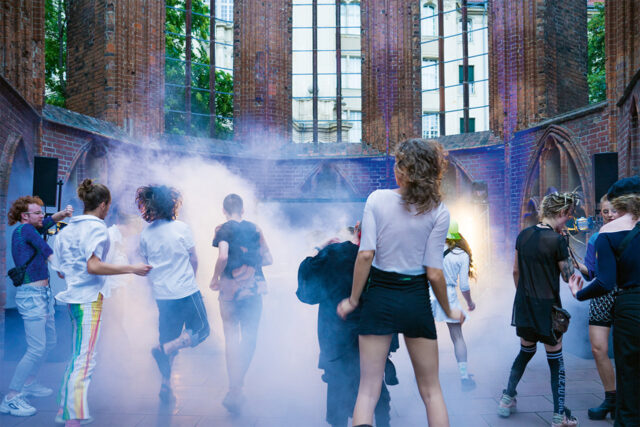
Paradise Found, 2019, Foto: Ink Agop
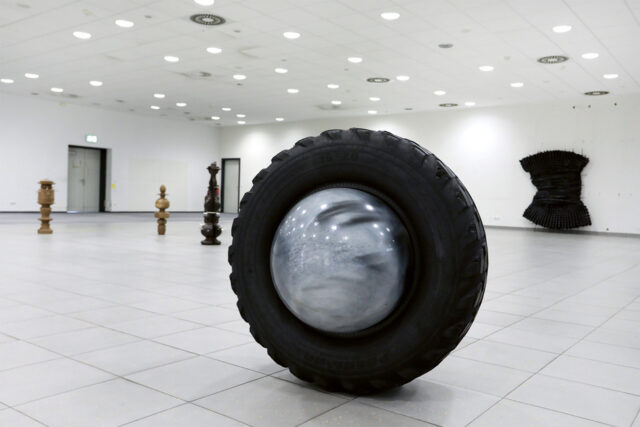
Viviana Abelson Hoop, Julian-Jakob Kneer, ornament sublime, 2019, Foto: Ink Agop

Answering this question seems to be the most difficult and an endless process for me because I have to ruminate on the past decade or so in which I have gone through Berlin as a female artist, a Korean artist, the founder and chief of an Asian contemporary art platform, and a mother. Since the very beginning, I have been interested in seeking a kind of universal identity, spanning the various backgrounds of ­Berlin-based contemporary artists in order to examine the question of identity as it is often perceived from the outside: according to gender, nationality, and cultural milieu. So I have created a space where the dichotomous logics about those issues could be discussed, proceeding with many projects. Above all, I had dreamt of creating a self-supporting space, based on an independent profit model. Recognizing limitations in workforce, culture, and the market of the art scene, however, I have experienced some moments of great suffering. But what has ­enabled me to endure those moments of suffering was not money but people, so that I would answer sincerely that a project space no longer means a physical space for me. It is a non-physical space, comprising people like artists, users and agents, or sometimes a network.The engagement and support from the Network has been vitally important to our growth and sustainability, and also our learning and understanding of the ­wider Berlin art scene beyond our micro-communities. For one thing, we have learned so much about the plurality of spaces and creative ­discourses in Berlin. But the open discussion that the Network allows with the Berlin Senate and one another has been really important in order to understand our needs as unique nodes in the artistic landscape of Berlin, and creative mutual goals for the sustainability and vitality of the community as a whole.The commercialization of the contemporary art scene in the last decade has created alienation and dissociation from the audience. The social filters at the established exhibition spaces, the sterilization of methods of presentation, and over-professionalism have created an image and perception of inaccessibility. In that respect, project spaces and art initiatives that resist these dynamics and strive for keeping direct social contact maintain the political potential of artistic practice. We don’t promote the conventional star system in selecting the artists we are collaborating with; we don’t pursue a hierarchical method by employing an omnipotent curator; we value the critical content and formal experimentalism of the artworks rather than the conditions of their presentation, and we don’t sell any artworks in our space; we don’t invest our energy in commercial speculation. We put an emphasis on the collective and on the social. We keep contact with our immediate neighborhood (in Neukölln), and we prioritize the knowledge about and the cultural accumulation of a particular geography. Hence, we engage in a counter-position against the dominant dynamics that have shaped the field of the contemporary art scene in the last decade. The pandemic condition has also been a drastic element that forced actors in the field to reconsider methods of presentation and social contact.