Auszeichnung
künstlerischer Projekträume
und -initiativen
Auszeichnung
künstlerischer Projekträume
und -initiativen
Archiv
:
2023
,
2022
,
2021
,
2020
,
2019
,
2018
,
2017
,
2016
,
2015
,
2014
,
2013
,
2012
Events
Archiv
Information
Stipendien 2021
Stipendien 2022
Statements
Rückblick
Kontakt
Impressum
2020
,
cashmere radio e. V.
2020
,
2018
,
2015
Radio Initiative
cashmereradio.com
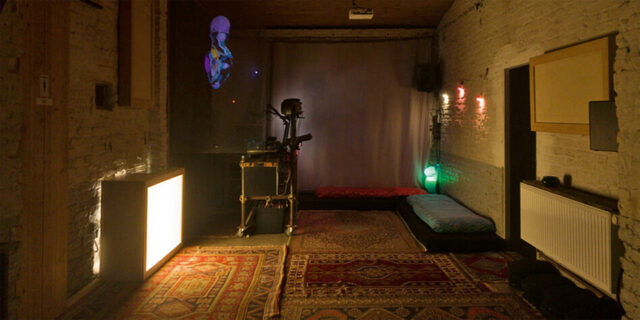
Woloban, Cashmere Studio, 2020
In den letzten zehn Jahren haben sich die Finanzierungsmöglichkeiten von Offspaces der bildenden Kunst sehr weiterentwickelt. Das betrifft nicht nur den Projektraumpreis oder die Basisförderung, sondern auch zum Beispiel die spartenoffene Förderung oder den Topf Präsentationen zeitgenössischer Kunst. Mit einer Kombination aus Getränkeverkäufen, Projektraumpreis, Basisförderung, Spartenoffener Förderung sowie ab und zu Raumvermietung war es uns möglich, unseren Raum zu finanzieren und selbst, ungenügend, entlohnt zu werden. Unsere künstlerisch-kuratorische Arbeit ist tatsächlich, wie der Name schon sagt, Arbeit, die angemessen vergütet werden sollte. Es ist falsch, Offspace-Arbeit ins Ehrenamt zu verdrängen. Hier wird derselbe Fehler wiederholt, der bei Künstler*innen gemacht wird. Jede andere Arbeit wird selbstverständlich entlohnt, nur die künstlerische nicht, da stehen wir noch am Anfang. Und auch bei Offspaces wird erwartet, dass die Menschen, die diese Räume gestalten und als Ressourcen zur Verfügung stellen, gar nichts bis wenig verdienen. Dabei sind Offspaces mit die ersten Anlaufstellen für Künstler*innen in Berlin. Es ist höchste Zeit, Honoraruntergrenzen für freie Kurator*innen und Offspace-Betreiber*innen festzulegen und Offspaces nicht nur als Nice-to-have oder Hobby von beruflich anderweitig beschäftigten oder reichen Menschen zu betrachten, sondern als einen tatsächlich professionellen Lebensinhalt. Dazu gehört auch, kuratorische Arbeit endlich als künstlerisch-publizistisch anzuerkennen und Kurator*innen/Offspace-Betreiber*innen in der Künstlersozialkasse zu versichern.
We are interested in reaching audiences that are NOT part of the art world.
Kunst kann Dialoge über gesellschaftliche Prozesse öffnen und vermitteln, sie kann Orte in der Stadt als Handlungsorte definieren und zugänglich machen. Darin ist sie ein wichtiges Element gesellschaftlicher Partizipation und politischer Willensbildungsprozesse. Das zeigt sich auch in der Ausweitung eines der Kunst zugeordneten Felds auf fast alle gesellschaftliche Kontexte. Die Stärke der Kunst ist es, in verschiedenen Räumen lebendig und erfahrbar zu werden. Somit bietet sie eine Schnittstelle für unterschiedliche Perspektiven und einen lebendigen Austausch.