Auszeichnung
künstlerischer Projekträume
und -initiativen
Auszeichnung
künstlerischer Projekträume
und -initiativen
Archiv
:
2023
,
2022
,
2021
,
2020
,
2019
,
2018
,
2017
,
2016
,
2015
,
2014
,
2013
,
2012
Events
Archiv
Information
Stipendien 2021
Stipendien 2022
Statements
Rückblick
Kontakt
Impressum
2015
,
Bublitz
2015
,
2011
Initiative
bublitz.org
GABRIEL,
Marianische Antiphonen I,
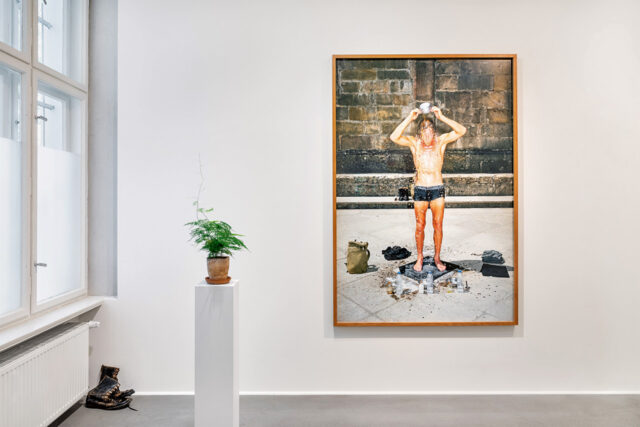
2019, Foto: Stefan Haehnel
… But definitely key words such as “project space”, “artist-run”, “grassroots”, “laboratory”, etc. are still good key words (to be constantly re-discussed) that underline the spirit and intention of such open experiments that somehow can only function as open experiments! A free interactive and inclusive format to create, express, and exchange interdisciplinary ideas with spontaneous, playful, DIY approaches; having access to and exchanging various physical spaces to manifest all facets of what independent cultural production can unfold – also in the sense of creating social awareness and responsibility due to the fact that every single participant, no matter the “role” or “title” is deeply aware & involved in the process of making things happen, sharing responsibilities and profits (if there are any 🙂 … Investors and businesses assumed the form of faceless international partnerships with enormous capital and devouring public resources deciding on the future of all citizens, delivering less and less social protection and consideration for cultural and social diversity.
It just makes my heart sing. Despite all that, I believe in art, but I guess it is about time to find new ways (again).
Answering this question seems to be the most difficult and an endless process for me because I have to ruminate on the past decade or so in which I have gone through Berlin as a female artist, a Korean artist, the founder and chief of an Asian contemporary art platform, and a mother. Since the very beginning, I have been interested in seeking a kind of universal identity, spanning the various backgrounds of Berlin-based contemporary artists in order to examine the question of identity as it is often perceived from the outside: according to gender, nationality, and cultural milieu. So I have created a space where the dichotomous logics about those issues could be discussed, proceeding with many projects. Above all, I had dreamt of creating a self-supporting space, based on an independent profit model. Recognizing limitations in workforce, culture, and the market of the art scene, however, I have experienced some moments of great suffering. But what has enabled me to endure those moments of suffering was not money but people, so that I would answer sincerely that a project space no longer means a physical space for me. It is a non-physical space, comprising people like artists, users and agents, or sometimes a network.