Auszeichnung
künstlerischer Projekträume
und -initiativen

Kreuzberg Pavillon

2011
Naunynstraße
53
Berlin
10999
Der 2011 gegründete Projektraum wird von Heiko Pfreundt und Lisa Schorm betrie-
ben. Der Raum dient der Entwicklung und Ausstellung von experimentellen künstlerischen, kuratorischen und kunstvermittelnden Projekten. Aus dem zwischen 2011 und 2016 wöchentlich stattfindenden Ausstellungsrhythmus, ist in den letzten drei Jahren eine Struktur aus inhaltlich zusammenhängenden Ausstellungsreihen und Aktionen hervorgegangen, welche sich als fluides,
durchlässiges und kollaboratives System begreift und mit spielerischen Eingriffen und sequentiellen Ausstellungskonzepten an einer ständigen Erweiterbarkeit und Re-Dramatisierung des Ausstellungsraumes und seiner Umgebung interessiert ist.
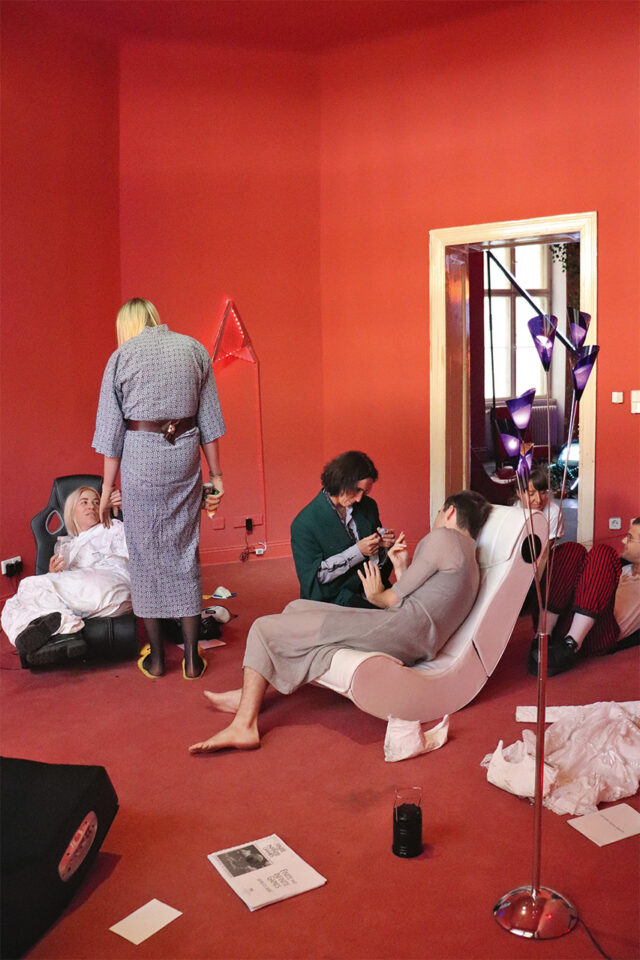
THE INFINITE GAME – a 23 hours live action, 2018, Foto: Heiko Pfreundt
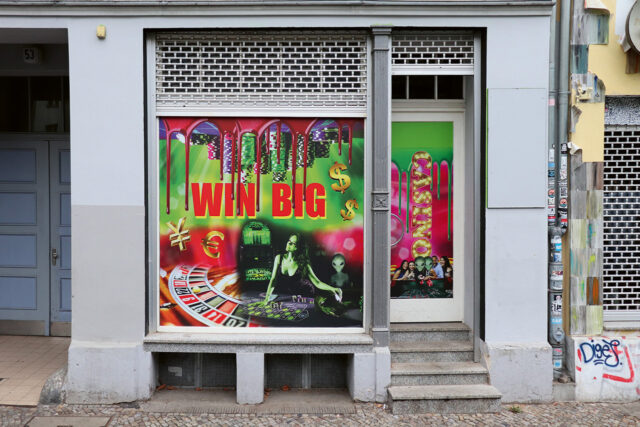
Tracey Snelling, Ausstellung: MMXXI, 2018, Foto: Heiko Pfreundt

These try-outs should be understood not in abstract terms, but in the light of the current struggles with labor, housing, racism, homophobia, and anti-fascist positions. If politicians can facilitate these processes for us to work, that would be great. We would wish that the situation wouldn’t look as somber but reality is also knocking on the door of the art sphere. Can politicians regulate the price for studios and project spaces? Can they facilitate real financial support for diversity? Can they push a little bit further and understand the complex situation of art practitioners during and after the pandemic, and give some more support?Ich sehe die Arbeit des Vereins als sehr wichtig an. Er ist Teil von dem, was vor etwa einem Jahrzehnt oder länger mit Initiativen wie Haben & Brauchen, der Koalition der Freien Szene und anderen losgetreten wurde. Alles braucht eine Lobby und ich bin froh, dass es nun eine Vertretung gibt. Zu meiner ­Mutter sage ich immer: „Solange man symbolisch-kulturelles Kapital (Pierre Bourdieu) nicht konkret in Zahlen bemessen kann, hat jegliche Freie Szene einen fragilen Stand.“In the early years, we were not thinking so much about accessibility to our exhibitions and events in a physical sense of venues without elevators or events without translation, but also in a digital sense. For many years, our online magazine hadn’t been accessible for screen-readers for people with poor vision or the blind, or keyboard navigation for people with mobility issues, for example. Getting there was a journey, and I think we would now start from a more accessible place. I would want local politicians to make their funding applications more accessible, not only in terms of able-ism, but also in terms of all forms of discrimination, e.g. proof of citizenship, applications having to be written in German. I wish that they would give a universal basic income to everyone (not just citizens), open their borders, and make healthcare free, free for everyone.