Auszeichnung
künstlerischer Projekträume
und -initiativen

Horse & Pony

2013
Altenbraker Straße
18
Berlin
12053
Horse & Pony, gegründet 2013 von Carrick Bell and Rocco Ruglio-Misurell, ist ein nicht kommerzieller, von Künstler:innen geführter Projektraum in Neukölln. Die Mission ist es, Künstler:- und Kurator:innen einen Raum für Experimente und Entwicklungen zu bieten und den kreativen Austausch mit anderen Räumen zu erleichtern. Wir hoffen, dass dies dazu ermutigt, außerhalb der typischen Arbeitsmodi aktiv zu werden, was beispielsweise zu von Künstler:innen
kuratierten Projekten führt, die sonst keinen geeigneten Ausstellungsort finden würden. Xanadu ist ein Raum für Bewegtbildarbeiten, der im Horse & Pony angesiedelt ist und dient als Plattform für verschiedene Herangehensweisen an das Format der Einzelbildprojektion.
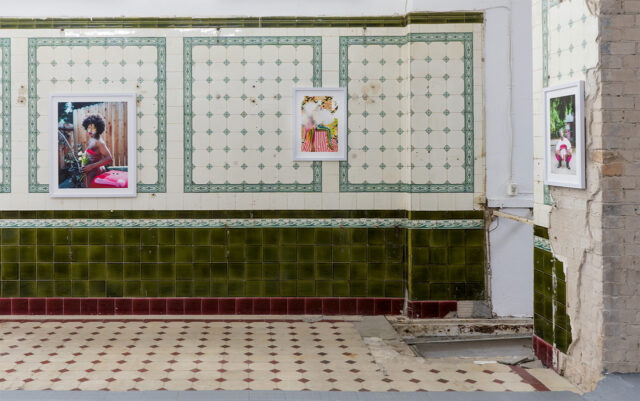
Derick Decario Ladale Whitson, Cheryl Donegan, Hell Yes, 2021, Foto: Rocco Ruglio Misurell

The engagement and support from the Network has been vitally important to our growth and sustainability, and also our learning and understanding of the ­wider Berlin art scene beyond our micro-communities. For one thing, we have learned so much about the plurality of spaces and creative ­discourses in Berlin. But the open discussion that the Network allows with the Berlin Senate and one another has been really important in order to understand our needs as unique nodes in the artistic landscape of Berlin, and creative mutual goals for the sustainability and vitality of the community as a whole.Nach den Künstler*innen und Architekt*innen kamen die Designer*innen. Heute sind’s die Start-upper*innen.The commercialization of the contemporary art scene in the last decade has created alienation and dissociation from the audience. The social filters at the established exhibition spaces, the sterilization of methods of presentation, and over-professionalism have created an image and perception of inaccessibility. In that respect, project spaces and art initiatives that resist these dynamics and strive for keeping direct social contact maintain the political potential of artistic practice. We don’t promote the conventional star system in selecting the artists we are collaborating with; we don’t pursue a hierarchical method by employing an omnipotent curator; we value the critical content and formal experimentalism of the artworks rather than the conditions of their presentation, and we don’t sell any artworks in our space; we don’t invest our energy in commercial speculation. We put an emphasis on the collective and on the social. We keep contact with our immediate neighborhood (in Neukölln), and we prioritize the knowledge about and the cultural accumulation of a particular geography. Hence, we engage in a counter-position against the dominant dynamics that have shaped the field of the contemporary art scene in the last decade. The pandemic condition has also been a drastic element that forced actors in the field to reconsider methods of presentation and social contact.