Auszeichnung
künstlerischer Projekträume
und -initiativen
Auszeichnung
künstlerischer Projekträume
und -initiativen
Archiv
:
2023
,
2022
,
2021
,
2020
,
2019
,
2018
,
2017
,
2016
,
2015
,
2014
,
2013
,
2012
Events
Archiv
Information
Stipendien 2021
Stipendien 2022
Statements
Rückblick
Kontakt
Impressum
2015
,
Bublitz
2015
,
2011
Initiative
bublitz.org
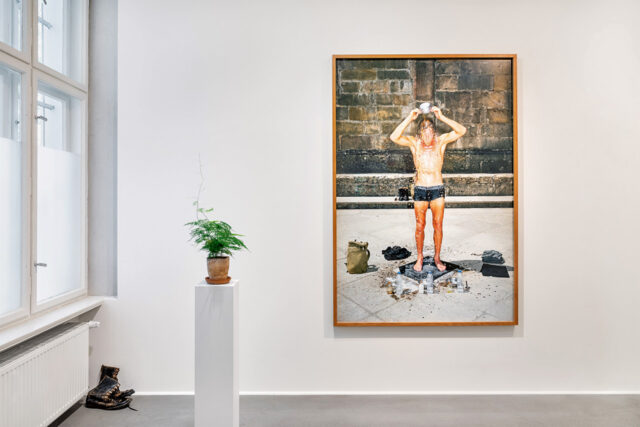
GABRIEL,
Marianische Antiphonen I,
2019, Foto: Stefan Haehnel
Marktorientierung spielt für mich keine Rolle, mich interessiert entweder ein spezielles Thema und dazu lade ich Künstler*innen ein oder ich erarbeite mit Künstler*innen und anderen Gruppen spartenübergreifende neue Konzepte.
Zum Erhalt von Kultur allgemein ist wichtig, sie aus dem ökonomischen Primat zu lösen; dafür stehen alle nicht kommerziellen Projekträume als selbstbestimmte Orte von experimentellen Fragestellungen, Versuchen, neuen ästhetischen Formulierungen, Untersuchungen sozialer Realitäten … und es wäre noch viel wichtiger, diese Szene insgesamt in ihrer Vielfalt zu erhalten, als vereinzelte Räume „auszuzeichnen“.
Durch die vermehrten Fördermöglichkeiten kann ich als Projektraumbetreiberin weiterhin komplett unabhängig von einer Marktorientierung agieren. Diese Entwicklung ist sehr positiv. Denn gerade in der Randlage Marzahn-Hellersdorf kann es keine marktorientierten Überlegungen für die Ausrichtung eines Programms geben. Es gibt kein touristisches Publikum. Das Publikum generiert sich aus den Menschen vor Ort. Für Marzahn-Hellersdorf bedeutet dies, dass sich die Menschen oft in prekären finanziellen Situationen befinden, eine marktorientierte Ausrichtung passt nicht in diesen Kontext. Die Themen Stadtmitte − Peripherie, öffentlicher Raum und/oder Rechtspopulismus können nicht marktorientiert verhandelt werden.