Auszeichnung
künstlerischer Projekträume
und -initiativen

Kunstverein Neukölln

2007
Mainzer Straße
42
Berlin
12053

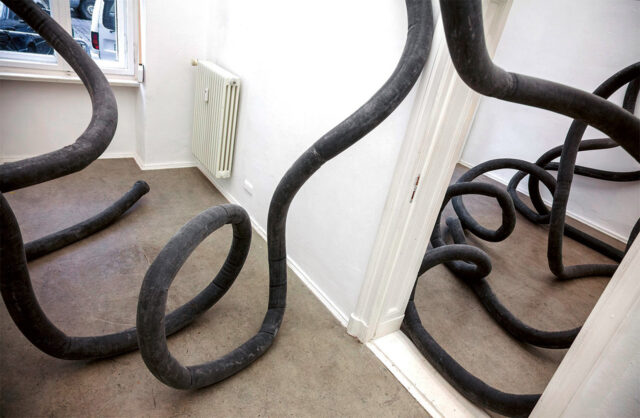
Sebastian Gumpinger, A Potent Sculpture, 2021, Foto: Rene Moritz
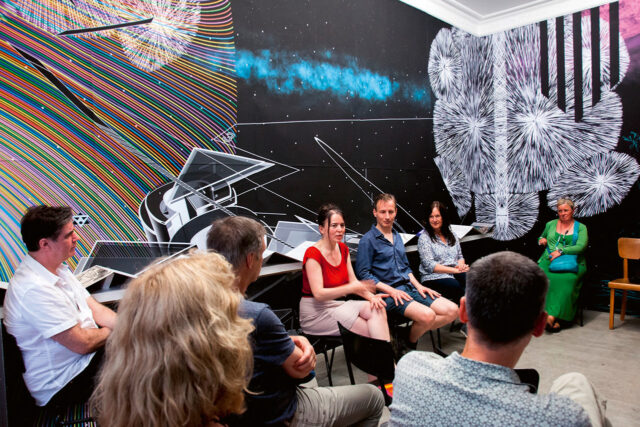
Ulrike Dornis & Jens Hanke, Die Siebente Reise, 2019, Foto: Rene Moritz

Die unweigerlich fortschreitende Gentrifizierung schränkt die künstlerischen Freiräume weiter ein. Dank des Engagements des Netzwerks freier Berliner Projekträume und -initiativen wurde die Szene jedoch zum Politikum, erreichte eine breitere Öffentlichkeit und erfuhr zudem durch neu eingerichtete Fördermöglichkeiten eine wirtschaftliche Stärkung. Die Vernetzung führte neben dem inhaltlichen Austausch zu verschiedensten Kooperationen und insbesondere zu einem solidarischen Kollektivbewusstsein. Insofern ist die Szene ähnlich vital wie in den 1990er-Jahren, zwar nicht mehr so spon­tan und verrückt, aber dafür um einiges professioneller. Das Selbstverständnis der freien Projekträume wandelte sich tendenziell von der Eventkultur des Nachwendeberlins zu einem diskursorientierten Ansatz in institutionsähnlichen Strukturen. Abgesehen davon, dass die meisten Projektraumbetreiber*innen selbst Künstler*innen sind, wurde die Zusammenarbeit von Organisator*innen und rein kreativ Schaffenden verbindlicher und seriöser. Wichtig ist hierbei auch die obligatorische Auszahlung von Ausstellungshonoraren als wirtschaftliche Anerkennung für künstlerische Leistungen. Die Veränderung der Strukturen erfolgte fließend.Answering this question seems to be the most difficult and an endless process for me because I have to ruminate on the past decade or so in which I have gone through Berlin as a female artist, a Korean artist, the founder and chief of an Asian contemporary art platform, and a mother. Since the very beginning, I have been interested in seeking a kind of universal identity, spanning the various backgrounds of ­Berlin-based contemporary artists in order to examine the question of identity as it is often perceived from the outside: according to gender, nationality, and cultural milieu. So I have created a space where the dichotomous logics about those issues could be discussed, proceeding with many projects. Above all, I had dreamt of creating a self-supporting space, based on an independent profit model. Recognizing limitations in workforce, culture, and the market of the art scene, however, I have experienced some moments of great suffering. But what has ­enabled me to endure those moments of suffering was not money but people, so that I would answer sincerely that a project space no longer means a physical space for me. It is a non-physical space, comprising people like artists, users and agents, or sometimes a network.Delegate. Delegate. Delegate. It is absolutely necessary to delegate bureaucratic paperwork to those who are professionally trained in these tasks. Running a project space with all its paperwork baggage is taking a toll on creative output: it slows us down. However, we cannot get away from this bureaucratic burden since we lack the financial resources for professional assistance in these matters.