Auszeichnung
künstlerischer Projekträume
und -initiativen
Auszeichnung
künstlerischer Projekträume
und -initiativen
Archiv
:
2023
,
2022
,
2021
,
2020
,
2019
,
2018
,
2017
,
2016
,
2015
,
2014
,
2013
,
2012
Events
Archiv
Information
Stipendien 2021
Stipendien 2022
Statements
Rückblick
Kontakt
Impressum
2016
,
grüntaler9
2016
,
2011
Grüntaler Straße
9
Berlin
13357
gruentaler9.com
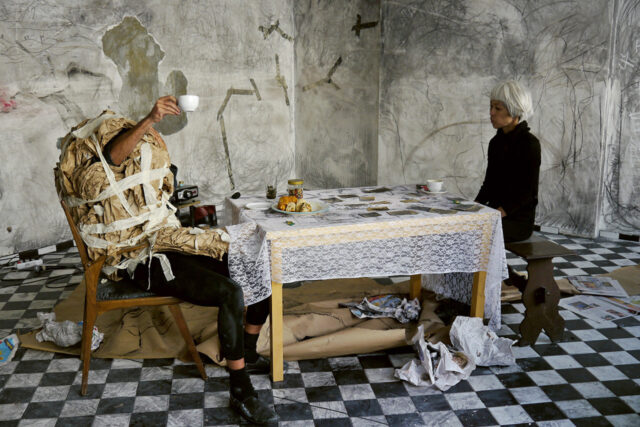
Nikhil Chopra & Yuko Kaseki,
9 Performance,
2011, Foto: Teena Lange
Mangelnde Vernetzung führt zu unnötigen Konkurrenzsituationen im Kampf um Aufmerksamkeit und Fördertöpfe. Der ideale Projektraum ist/war eine Win-win-Situation für Betreiber*innen und Künstler*innen. Beide können neue Experimente starten und neue Modelle ausprobieren unter fairen finanziellen Bedingungen, sprich mit Honorar und Projektfinanzierung/Sponsoren. Projekträume haben sich auch durch Verdrängung und höhere Mieten in entlegene Kieze und Bezirke verlagert/verlagern müssen. Wir alle sind Teil eines „idealen“ Projektraums, zusammen sind wir höchst heterogen, divers und das größte zusammenhängende Ausstellungshaus in Berlin. In Berlin hat sich in den letzten zehn Jahren das Verhältnis zu Raum als einer grundlegenden Basis für unser Zusammenleben dramatisch verändert − und zwar aus der Perspektive der künstlerischen Nutzung eindeutig zum Schlechten. Der Profitwahnsinn hat die Stadt seit der Finanzkrise zunehmend erfasst; sowohl global agierende Finanz- und Immobilienhaie als auch viele mittlere und kleine Geldanleger haben Berlin und seine umbauten Räume als handelbare Ware auserkoren mit der Folge, dass die Preise dafür explodiert sind. Die Politik unternimmt dagegen leider nichts wirklich Effektives und scheint daran kaum Anstoß zu nehmen. Darunter leiden in erster Linie die sozial Schwächeren und nicht zuletzt die meisten Kunst- und Kulturschaffenden. Berlin ist im Begriff, seine Ausstrahlung und seinen Nimbus als Anziehungspunkt für experimentelle und innovative Kunstprojekte zu verlieren. Wir hoffen, dass sich weiterer Widerstand gegen diese allgemeine Tendenz gerade auch aus dem Feld der Kunst regt und Berlin weiterhin ein Ort für lebendige und kritische Kunst sein wird.
An dieser Stelle muss betont werden, dass es auf diesem Gebiet noch viel zu entdecken gibt. Insbesondere in Bezug auf Künstler*innen und Kurator*innen, die nicht in Deutschland geboren sind und/oder die hiesige Sprache, Gewohnheiten und Bürokratie nicht gut beherrschen. Trotz der jüngst geschaffenen Fördermaßnahmen hat die überwiegende Mehrheit der Projekträume eine ungewisse Zukunft und ist weiterhin auf ehrenamtliche Arbeit und temporäre Räume angewiesen. Die Türen der Projekträume stehen für alle offen, der Eintritt ist frei und die geleistete Arbeit hat somit eine wichtige soziale Dimension. Das passt gut: Berlin war noch nie eine elitäre Stadt. Der Lockdown hat außerdem gezeigt, wie wichtig reale Begegnungen und der direkte Zugang zu den Werken sind. Für die Zukunft gilt es, die bestehenden Förderungen fortzusetzen und weiter zu verstärken, um eine größere Planungssicherheit zu gewährleisten und die oft unsichtbare, aber unverzichtbare ehrenamtliche Arbeit für die ordnungsgemäße Durchführung von Veranstaltungen auf ein Minimum zu reduzieren.
Das Verständnis davon, was Kunst ist, ist im ständigen Wandel begriffen. Interdisziplinäres, medien- und themenübergreifendes Arbeiten ist zur „Normalität“ geworden. Der digitale Raum wird mehr und mehr als künstlerischer Handlungsraum erschlossen.