Auszeichnung
künstlerischer Projekträume
und -initiativen

Errant Sound

2010
Rungestraße
20
Berlin
10179

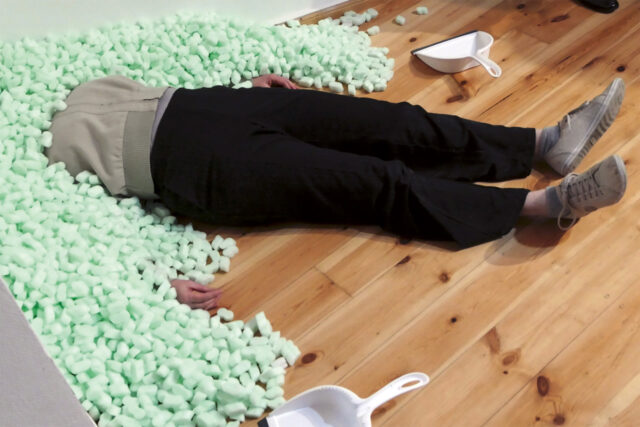
Janine Eisenächer & Steffi Weismann, Ready Making #1, 2019, Foto: Janine Eisenächer & Steffi Weismann
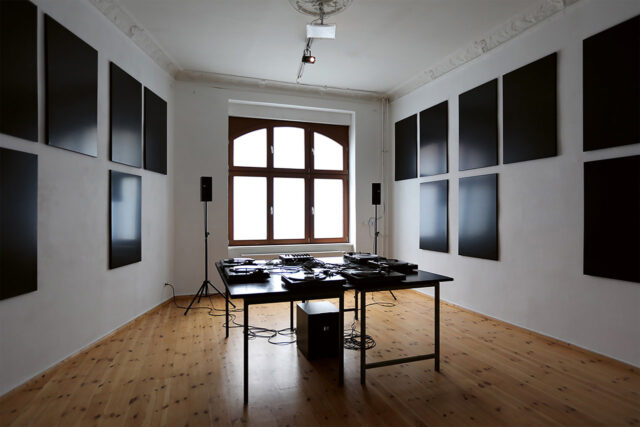
Erik Smith, Titanic, Displacements, 2019, Foto: Erik Smith

In the early years, we were not thinking so much about accessibility to our exhibitions and events in a physical sense of venues without elevators or events without translation, but also in a digital sense. For many years, our online magazine hadn’t been accessible for screen-readers for people with poor vision or the blind, or keyboard navigation for people with mobility issues, for example. Getting there was a journey, and I think we would now start from a more accessible place. I would want local politicians to make their funding applications more accessible, not only in terms of able-ism, but also in terms of all forms of discrimination, e.g. proof of citizenship, applications having to be written in German. I wish that they would give a universal basic income to everyone (not just citizens), open their borders, and make healthcare free, free for everyone.It’s hard to look back on the last ten years and not get distracted by Co-Vid and the massive interruption that has caused in all aspects of life. But generally, Berlin is getting more expensive, no news there: There are less store fronts perhaps to rent for a project space than there used to be. Facebook is no longer used as an announcement tool. Do young people still flock to Berlin?The Network is a fundamental organization in the artistic landscape of Berlin. Without the Network, many of the support structures that have been built in recent years simply would not exist. Unionizing has always been problematic in a sector like the art sphere where the construction of the worker has been historically based on the idea of the author, and therefore the ego. In order to achieve change, cooperative models like the Network are a must. The challenge is how to create belonging from difference.