Auszeichnung
künstlerischer Projekträume
und -initiativen
Auszeichnung
künstlerischer Projekträume
und -initiativen
Archiv
:
2023
,
2022
,
2021
,
2020
,
2019
,
2018
,
2017
,
2016
,
2015
,
2014
,
2013
,
2012
Archive
Information
Scholarships
Statements
Review
Contact
Imprint
2021
,
Spoiler Aktionsraum
2021
,
2018
Quitzowstraße
108a
Berlin
10551
spoiler.zone
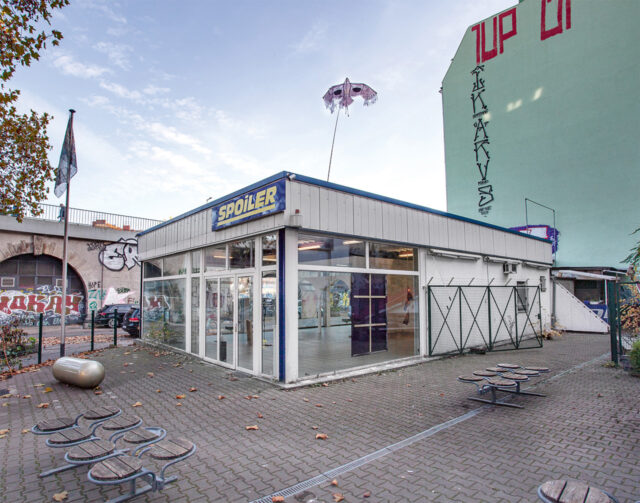
Außenansicht, 2020
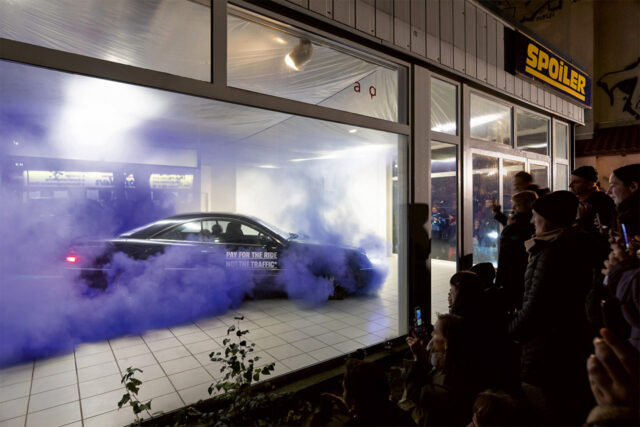
Lena Marie Emrich, a total burnout, 2019,
Foto: André Wunstorf
Die Gründung des Netzwerks hat unsere Arbeit verändert: Es gibt eine Website, einen Kalender und eine E-Mail-Liste, die die Zusammenarbeit und den Austausch von Informationen erleichtern. Es ist von größter Bedeutung, einen Gesprächspartner zu haben, der in unserem Namen sprechen kann, der den Dialog mit den Politiker*innen aufrechterhält, der den zukünftigen Bedarf an Förderung und Räumen plant sowie neue Projektraummacher*innen und -initiativen begrüßt. Das Ideal wäre, die richtige Balance zwischen Flexibilität und Autorität zu finden, die Vielfalt, die Ziele und die Bedürfnisse aller zu respektieren und auf die Idee zu verzichten, starre und standardisierte Verhaltensregeln zu diktieren, auch wenn sie demokratisch beschlossen werden.
Zum Erhalt von Kultur allgemein ist wichtig, sie aus dem ökonomischen Primat zu lösen; dafür stehen alle nicht kommerziellen Projekträume als selbstbestimmte Orte von experimentellen Fragestellungen, Versuchen, neuen ästhetischen Formulierungen, Untersuchungen sozialer Realitäten … und es wäre noch viel wichtiger, diese Szene insgesamt in ihrer Vielfalt zu erhalten, als vereinzelte Räume „auszuzeichnen“.
Die Diversität des Begriffs „Projektraum“ öffnet durchaus Horizonte, führt aber auch im Gegenzug zu fachlichen Überdehnungen des Kunstbegriffs. Der vorherrschende Fördermarkt-Sozialdarwinismus stellt Tiefgänge infrage. Komplexe kulturelle Transformationsprozesse lassen sich mit den oft daraus entspringenden tagespolitischen Diskursen nicht ausreichend begleiten. Im Grunde genommen entsteht so ein Oberflächen-Projektraum-Diskurs-Impressionismus.