Auszeichnung
künstlerischer Projekträume
und -initiativen

Liebig12

2011
Liebigstraße
12
Berlin
10247

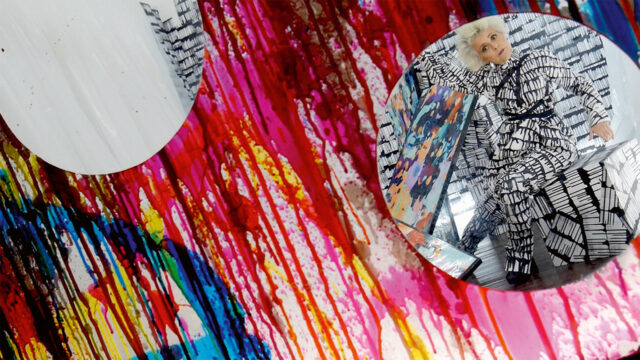
Jana Linke & Allegra Solitude, Repetitive Differential, Performance Anna Clementi
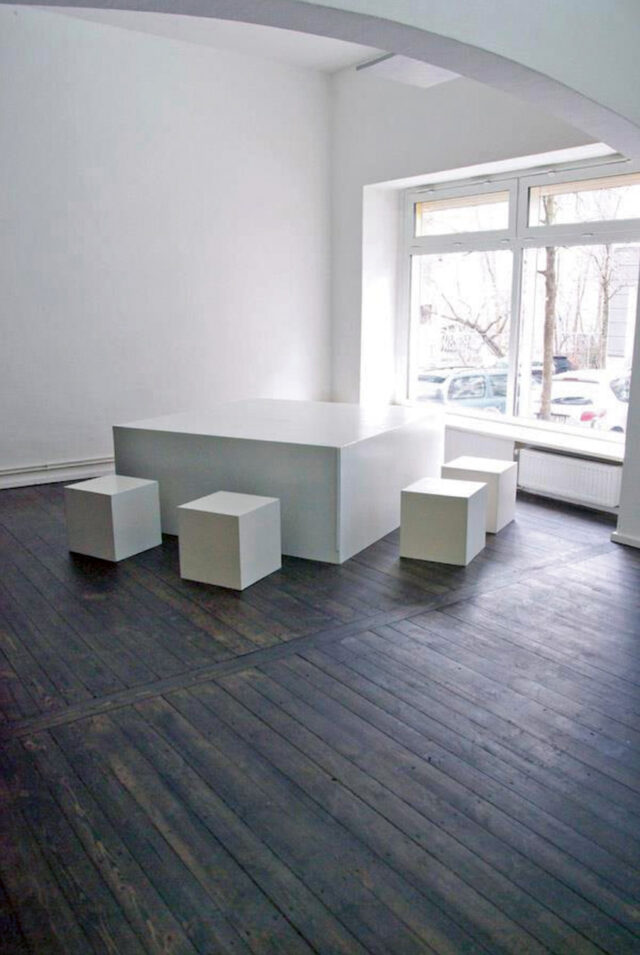
Raumansicht, Foto: Aleks Slota

Even though COVEN doesn’t have our own project space (although we are thinking about getting a ­studio …), we make space, mainly for our queer community in Berlin and online. We make space to come together, meet each other, talk about stuff, and laugh. We try to pay as many queers as we can to make art with us. To think about art, to question art. Art for us has always been about creating community and offer alternatives to worn-out narratives. We like art for its world-making capacity.In the early years, we were not thinking so much about accessibility to our exhibitions and events in a physical sense of venues without elevators or events without translation, but also in a digital sense. For many years, our online magazine hadn’t been accessible for screen-readers for people with poor vision or the blind, or keyboard navigation for people with mobility issues, for example. Getting there was a journey, and I think we would now start from a more accessible place. I would want local politicians to make their funding applications more accessible, not only in terms of able-ism, but also in terms of all forms of discrimination, e.g. proof of citizenship, applications having to be written in German. I wish that they would give a universal basic income to everyone (not just citizens), open their borders, and make healthcare free, free for everyone.Der Begriff „Kunst“ ist spannend, da er für jede Person etwas anderes bedeuten kann. Gerade in der Diversität der Ansichten über „Kunst“ liegt ihre Kraft. Das macht sich auch in der freien Szene der Projekträume bemerkbar. Es werden die unterschiedlichsten Sichtweisen auf und über Kunst vertreten und nichts unterliegt der Geschmackslimitierung einer kleinen Elite. Das bedeutet eine große Vielfalt und Innova­tionsfreude an künstlerischer, kultureller Entwicklung. Die Projektraumarbeit verstärkt generell das Interesse an künstlerischen Prozessen und verlagert die Aufmerksamkeit vom Objekt hin zum Entstehungsprozess. − Was insbesondere Kunst in Projekträumen im öffentlichen Raum kann: Leute aus der Bevölkerung neugierig machen, sich die Kunst vor Ort anzuschauen, bei Gelegenheit den Kontakt zu Betreiber*innen und Künstler*innen aufzunehmen, mit ihnen ins Gespräch zu kommen, und: wiederzukommen. Also: die Begegnung mit Kunst im Alltag ermöglichen.