Auszeichnung
künstlerischer Projekträume
und -initiativen

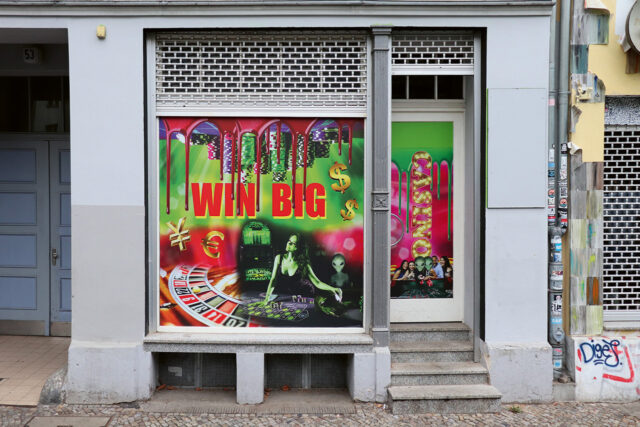
Kreuzberg Pavillon

2011
Naunynstraße
53
Berlin
10999
Der 2011 gegründete Projektraum wird von Heiko Pfreundt und Lisa Schorm betrie-
ben. Der Raum dient der Entwicklung und Ausstellung von experimentellen künstlerischen, kuratorischen und kunstvermittelnden Projekten. Aus dem zwischen 2011 und 2016 wöchentlich stattfindenden Ausstellungsrhythmus, ist in den letzten drei Jahren eine Struktur aus inhaltlich zusammenhängenden Ausstellungsreihen und Aktionen hervorgegangen, welche sich als fluides,
durchlässiges und kollaboratives System begreift und mit spielerischen Eingriffen und sequentiellen Ausstellungskonzepten an einer ständigen Erweiterbarkeit und Re-Dramatisierung des Ausstellungsraumes und seiner Umgebung interessiert ist.
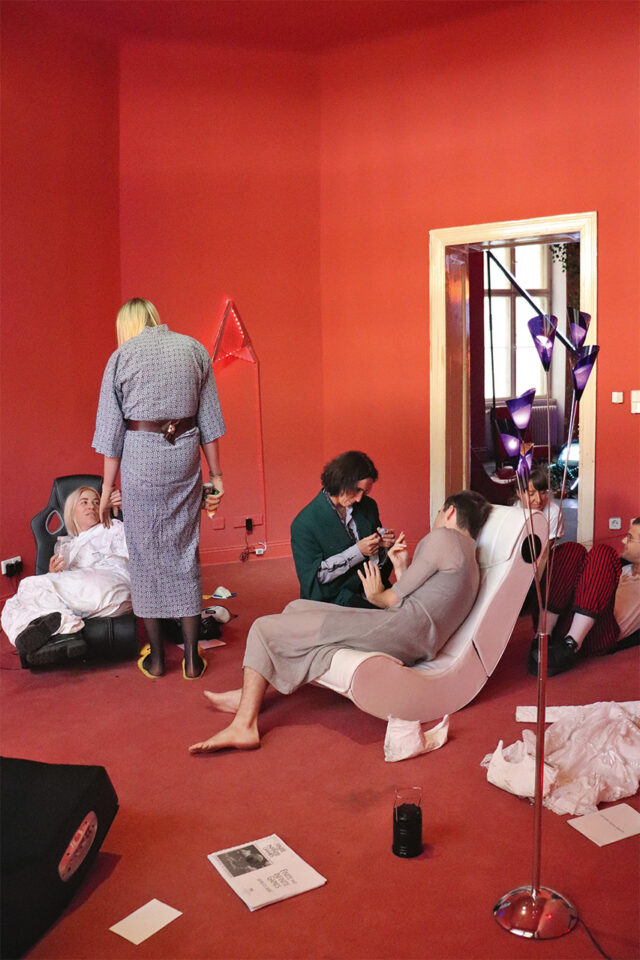
Ashley started out as a self-funded project. This allowed presenting art in a self-determined way, especially by working artists not part of the commercial art market but also those flying under the radar of larger public institutions. Of course, this model also brought up the question of sustainability. In the last few years, with rising rents and spaces closing down, this question has become more and more pressing for everyone on the free scene. Winning the project space prize in 2018 was a pivotal moment for Ashley, particularly because beyond recognizing the work done by independently-run spaces, the prize money could be spread over several years to keep our program running. However, a prize also follows the logic of exceptionality which puts a lot of pressure on project spaces to ‘perform’. Hence, the structural funding program by the Senate significantly changed the conditions of our work because by ­confronting us with the administrative work inherent in public funding, we evolved our own internal structure to accommodate longer-term planning while still maintaining the flexibility needed to track the subtle changes in the art communities around us. Before this program, going from project to project rather than planning two years ahead, it was difficult to apply for project funding due to the fact that application deadlines are often one year in advance and therefore difficult to meet if you are not a publicly-funded institution or commercial project with the resources to plan several months or even a year ahead. So this program does help a lot to allow project spaces to stake a claim on public art funding. At the same time, with the structural funding approved on a two-year basis, it remains unclear how this mode of operating will last a few years, or even one year into the future.In the early years, we were not thinking so much about accessibility to our exhibitions and events in a physical sense of venues without elevators or events without translation, but also in a digital sense. For many years, our online magazine hadn’t been accessible for screen-readers for people with poor vision or the blind, or keyboard navigation for people with mobility issues, for example. Getting there was a journey, and I think we would now start from a more accessible place. I would want local politicians to make their funding applications more accessible, not only in terms of able-ism, but also in terms of all forms of discrimination, e.g. proof of citizenship, applications having to be written in German. I wish that they would give a universal basic income to everyone (not just citizens), open their borders, and make healthcare free, free for everyone.Art has the unique ability to help us expand our imagination and the way we think about the world. By bending the lines of logic and ­rational approaches, it offers a gateway to our collective unconscious and provides a terrain where everything is possible, hence pushing our thinking process forward. We see art and artists as seismographs for changes in society. There is also great freedom in art, addressing big and timeless questions that are independent of current economic and political realities and interests. Art can be a space for utopias, or for histories outside of history books. Art is important because it keeps us going through the difficult and dark times. Art keeps us alive.