Auszeichnung
künstlerischer Projekträume
und -initiativen

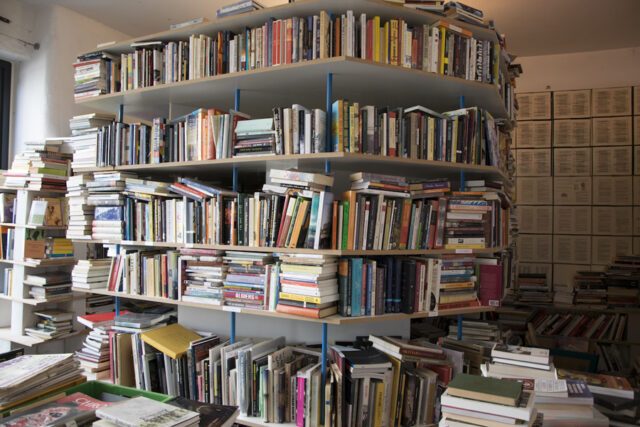
Hopscotch Reading Room

2018
Kurfürstenstraße
14 b (Im Hof)
Berlin
10785

Foto: Young-jun Tak

Heute wie damals würden wir die Bedeutung des Raumes selbst als primären ­Einfluss auf die Art der Initiative betonen. Das bedeutet auch, dass eine andere räumliche Konfiguration möglicherweise ein ganz anderes Ergebnis hervorbringen könnte. Wir würden immer noch empirisch und experimentell vorgehen und das Projekt lang­sam aus seinen Versuchen, Fehlern und Glückstreffern entstehen lassen. Von der Politik wünschen wir uns mehr Unterstützung beim Thema Immobilienspekulation und bessere Gewerbeverträge. Die Herausforderung nach Corona ist es, neue Situationen der Geselligkeit zu schaffen, die offen und sicher zugleich sind. Das ist kein Ziel, sondern eine Voraussetzung für unsere zukünftige ­Existenz.Es gibt keinen Prototypen, von dem aus verbindliche Aussagen gemacht werden können. Das zeigen auch immer ­wieder die Selbstverständnisdebatten. Die Projekträume haben sich mit der Stadt und ihrer Gentrifizierung geändert, aber ebenso mit dem Kunstsystem und der Kunst bzw. der künstlerischen ­Praxis in der Stadt. Die Szene ist konstant im Fluss. Manche Projekträume haben sich institutionalisiert, andere lehnen das kontinuierlich ab und befinden sich eher außerhalb des Radars. Ich sehe darin eine Stärke und würde nicht von einem „idealen Projektraum zur jeweiligen Zeit“ sprechen. So unterschiedlich die Räume physisch sind, so unterschiedlich ist teilweise die Art, wie sie gemacht werden, und an wen sie sich wenden.Ashley started out as a self-funded project. This allowed presenting art in a self-determined way, especially by working artists not part of the commercial art market but also those flying under the radar of larger public institutions. Of course, this model also brought up the question of sustainability. In the last few years, with rising rents and spaces closing down, this question has become more and more pressing for everyone on the free scene. Winning the project space prize in 2018 was a pivotal moment for Ashley, particularly because beyond recognizing the work done by independently-run spaces, the prize money could be spread over several years to keep our program running. However, a prize also follows the logic of exceptionality which puts a lot of pressure on project spaces to ‘perform’. Hence, the structural funding program by the Senate significantly changed the conditions of our work because by ­confronting us with the administrative work inherent in public funding, we evolved our own internal structure to accommodate longer-term planning while still maintaining the flexibility needed to track the subtle changes in the art communities around us. Before this program, going from project to project rather than planning two years ahead, it was difficult to apply for project funding due to the fact that application deadlines are often one year in advance and therefore difficult to meet if you are not a publicly-funded institution or commercial project with the resources to plan several months or even a year ahead. So this program does help a lot to allow project spaces to stake a claim on public art funding. At the same time, with the structural funding approved on a two-year basis, it remains unclear how this mode of operating will last a few years, or even one year into the future.