Auszeichnung
künstlerischer Projekträume
und -initiativen
Auszeichnung
künstlerischer Projekträume
und -initiativen
Archiv
:
2023
,
2022
,
2021
,
2020
,
2019
,
2018
,
2017
,
2016
,
2015
,
2014
,
2013
,
2012
Archive
Information
Scholarships
Statements
Review
Contact
Imprint
2020
,
cashmere radio e. V.
Berlin
2020
,
2018
,
Berlin
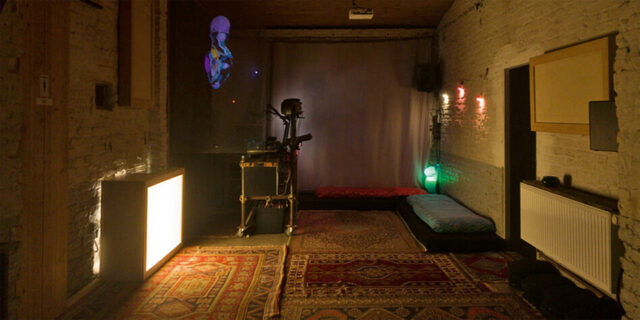
Woloban, Cashmere Studio, 2020
Die Coronapandemie hat uns merkwürdigerweise eher resilienter und produktiver gemacht − und darin bestärkt, immer wieder hinaus in den Stadtraum zu gehen, um zu versuchen, Einfluss zu nehmen.
Wir brauchen für den Bereich Freie Szene/Kunstprojekträume ein noch viel größeres Fördervolumen. Auch eine langfristige Förderung für größere Projekträume (die bereits halb institutionalisiert sind) werden dringend benötigt.
Die Pandemie hat uns gezwungen, nicht nur mehr in den digitalen Raum zu expandieren, sondern uns darüber hinaus mehr Gedanken zu machen hinsichtlich eines barrierefreien Zugangs – insbesondere auch im digitalen Raum –, um ein möglichst breites Publikum mit unseren Ausstellungen, Performances, Veranstaltungen und Kinder-Workshops zu erreichen. Die Verwendung von Videos anstelle von Werktexten, die Verwendung von Leichter Sprache auf der Website sowie die Ausstellung als Spiel sind nur einige exemplarische Strategien, die wir während Corona dazu entwickelt haben – und beibehalten werden.