Auszeichnung
künstlerischer Projekträume
und -initiativen

U144 Untergrundmuseum

U144 Untergrundmuseum

Linienstraße
144
Berlin

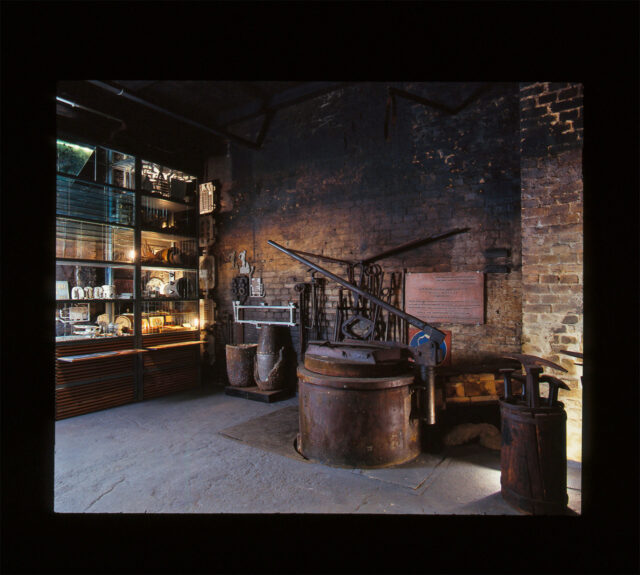
Gießerei Sprachraum, reale Betriebsfunktion, 1995–2000,Foto: Uwe Walter
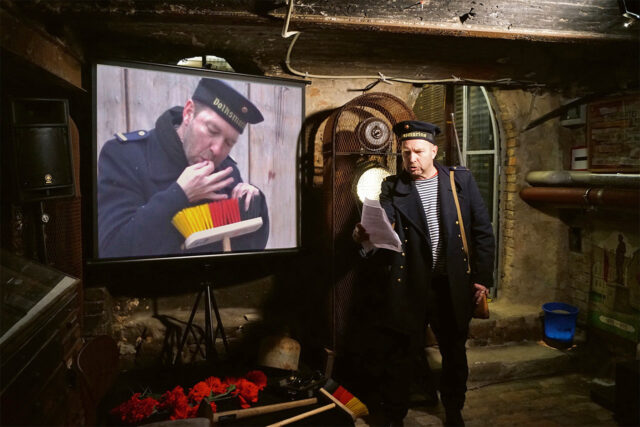
Volxmarine Revolution 1918–2018, Performance: Rainer Görß, Foto: A. Rudolph

Answering this question seems to be the most difficult and an endless process for me because I have to ruminate on the past decade or so in which I have gone through Berlin as a female artist, a Korean artist, the founder and chief of an Asian contemporary art platform, and a mother. Since the very beginning, I have been interested in seeking a kind of universal identity, spanning the various backgrounds of ­Berlin-based contemporary artists in order to examine the question of identity as it is often perceived from the outside: according to gender, nationality, and cultural milieu. So I have created a space where the dichotomous logics about those issues could be discussed, proceeding with many projects. Above all, I had dreamt of creating a self-supporting space, based on an independent profit model. Recognizing limitations in workforce, culture, and the market of the art scene, however, I have experienced some moments of great suffering. But what has ­enabled me to endure those moments of suffering was not money but people, so that I would answer sincerely that a project space no longer means a physical space for me. It is a non-physical space, comprising people like artists, users and agents, or sometimes a network.Die Umstände für unabhängige Projekträume haben sich bei gleichbleibender Dringlichkeit für deren Existenz geändert: Wir brauchen weiterhin Freiräume, in denen die Frage „Wie wollen wir zusammenleben in dieser vernetzten und verletzten Welt?“ auf viele verschiedene Arten gestellt und Annäherungen an eine mögliche Beantwortung ausprobiert werden können. Die massiv gesteigerten Raum­mieten in Berlin und die fast ausnahmslose Finanzierung nur über Projektförderung und die Nichtunterstützung von Infrastruktur erschweren und verunmöglichen größtenteils Experimentation, Ausprobieren, einen Raum zum Scheitern und damit Lernen. Projektanträge müssen vorab bis zum letzten Ergebnis ausbuchstabiert werden inklusive der erwarteten Zuschauer*innenzahl. Das fesselt viel Ideenreichtum und Mut zu Neuem, es verhin­dert gleichzeitig ein kontinuierliches Arbeiten und hält Projekträume dauerhaft in einem Zustand ungesunder, prekärer Arbeitsbedingungen. Was wir uns für die Berliner Projekträume wünschen? Planbare, langfristige und nachhaltige Förderung mit Respekt und Vertrauen in Räume, die seit Jahren wesentlich zur Kulturlandschaft beitragen.The city has become more expensive overall and therefore there is less free space – there are less “Freiräume”. Our definition has not changed as a project space. The concept of an ideal space is completely dependent on what the organizers/artists/curators are interested in doing. In our opinion, there isn’t ONE type of space that is ideal which is actually what is so wonderful about project spaces in general – they are diverse, and completely different. It seems that because of the lack of spaces and the increased rents, more project spaces have turned towards commercial models. But since funding has become more commonplace in the scene, meaning it’s more common to pay artists who are involved in shows, performances, readings, events, etc. at project spaces, this has put more pressure on spaces in general to have to secure financing. We would argue that since funding has become more readily available, the structures have begun to change. It’s a bit of a double-edged sword. It’s wonderful to receive funding and be able to support artists, and as a result, the scene has become much more professional. But at the same time, it is harder in some ways to do projects more spontaneously and in an improvised fashion. This, as a result, has changed the (power) dynamics between the artists and the project space organizers, as very often the organizers are NOT funded but the artists participating in the projects are. This creates a rather awkward dynamic and as organizers ourselves, it’s frustrating for us to not be paid for our efforts and contributions to the “Freie Szene”.