Auszeichnung
künstlerischer Projekträume
und -initiativen

Directors Lounge

Directors Lounge

Berlin

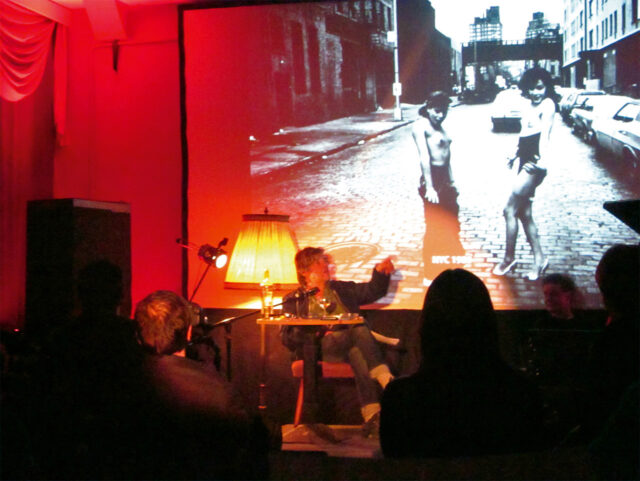
Birol Ünel bei DL X im Naherholung Sternchen, Screen: Miron Zownir,
Foto: Julia Murakami
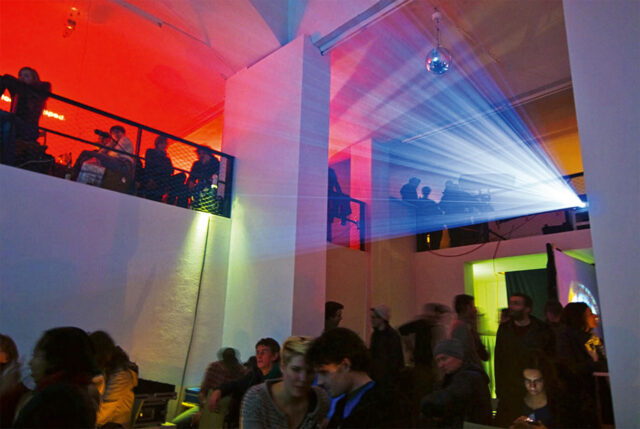
DL 7 im Meinblau,
Foto: Klaus W. Eisenlohr

In den letzten zehn Jahren haben sich die Finanzierungsmöglichkeiten von Offspaces der bildenden Kunst sehr weiter­entwickelt. Das betrifft nicht nur den Projektraumpreis oder die Basisförderung, sondern auch zum Beispiel die spartenoffene Förderung oder den Topf Präsentationen zeitgenössischer Kunst. Mit einer Kombination aus Getränkeverkäufen, Projektraumpreis, Basisförderung, Spartenoffener Förderung sowie ab und zu Raumvermietung war es uns möglich, unseren Raum zu finan­zieren und selbst, ungenügend, entlohnt zu werden. Unsere künst­lerisch-kuratorische Arbeit ist tatsächlich, wie der Name schon sagt, Arbeit, die angemessen vergütet werden sollte. Es ist falsch, Offspace-Arbeit ins Ehrenamt zu verdrängen. Hier wird derselbe Fehler wiederholt, der bei Künstler*innen gemacht wird. Jede andere Arbeit wird selbstverständlich entlohnt, nur die künst­lerische nicht, da stehen wir noch am Anfang. Und auch bei ­Off­spaces wird erwartet, dass die Menschen, die diese Räume gestal­ten und als Ressourcen zur Verfügung stellen, gar nichts bis wenig verdienen. Dabei sind Offspaces mit die ersten Anlaufstellen für Künstler*innen in Berlin. Es ist höchste Zeit, Honoraruntergrenzen für freie Kurator*innen und Offspace-Betreiber*innen festzulegen und Offspaces nicht nur als Nice-to-have oder Hobby von beruflich anderweitig beschäftigten oder reichen ­Menschen zu betrach­­ten, sondern als einen tatsächlich professionellen Lebensinhalt. Dazu gehört auch, kuratorische Arbeit endlich als künstlerisch-publizistisch anzuerkennen und Kurator*innen/Offspace-Betreiber*innen in der Künstlersozialkasse zu versichern.Ashley started out as a self-funded project. This allowed presenting art in a self-determined way, especially by working artists not part of the commercial art market but also those flying under the radar of larger public institutions. Of course, this model also brought up the question of sustainability. In the last few years, with rising rents and spaces closing down, this question has become more and more pressing for everyone on the free scene. Winning the project space prize in 2018 was a pivotal moment for Ashley, particularly because beyond recognizing the work done by independently-run spaces, the prize money could be spread over several years to keep our program running. However, a prize also follows the logic of exceptionality which puts a lot of pressure on project spaces to ‘perform’. Hence, the structural funding program by the Senate significantly changed the conditions of our work because by ­confronting us with the administrative work inherent in public funding, we evolved our own internal structure to accommodate longer-term planning while still maintaining the flexibility needed to track the subtle changes in the art communities around us. Before this program, going from project to project rather than planning two years ahead, it was difficult to apply for project funding due to the fact that application deadlines are often one year in advance and therefore difficult to meet if you are not a publicly-funded institution or commercial project with the resources to plan several months or even a year ahead. So this program does help a lot to allow project spaces to stake a claim on public art funding. At the same time, with the structural funding approved on a two-year basis, it remains unclear how this mode of operating will last a few years, or even one year into the future.In the early years, we were not thinking so much about accessibility to our exhibitions and events in a physical sense of venues without elevators or events without translation, but also in a digital sense. For many years, our online magazine hadn’t been accessible for screen-readers for people with poor vision or the blind, or keyboard navigation for people with mobility issues, for example. Getting there was a journey, and I think we would now start from a more accessible place. I would want local politicians to make their funding applications more accessible, not only in terms of able-ism, but also in terms of all forms of discrimination, e.g. proof of citizenship, applications having to be written in German. I wish that they would give a universal basic income to everyone (not just citizens), open their borders, and make healthcare free, free for everyone.